Korean Address Format Explained: Road Names vs Old Lot Numbers
April 28, 2026
If you’ve ever tried to send a parcel to Korea, fill out a visa application, or register your Korean address with an online shopping platform, you’ve almost certainly encountered a confusing situation: two completely different-looking addresses that refer to the exact same building. One includes a street name like Teheran-ro; the other seems to reference some mysterious plot of land. Welcome to Korea’s dual address system — and once you understand it, navigating Korean addresses becomes surprisingly straightforward.
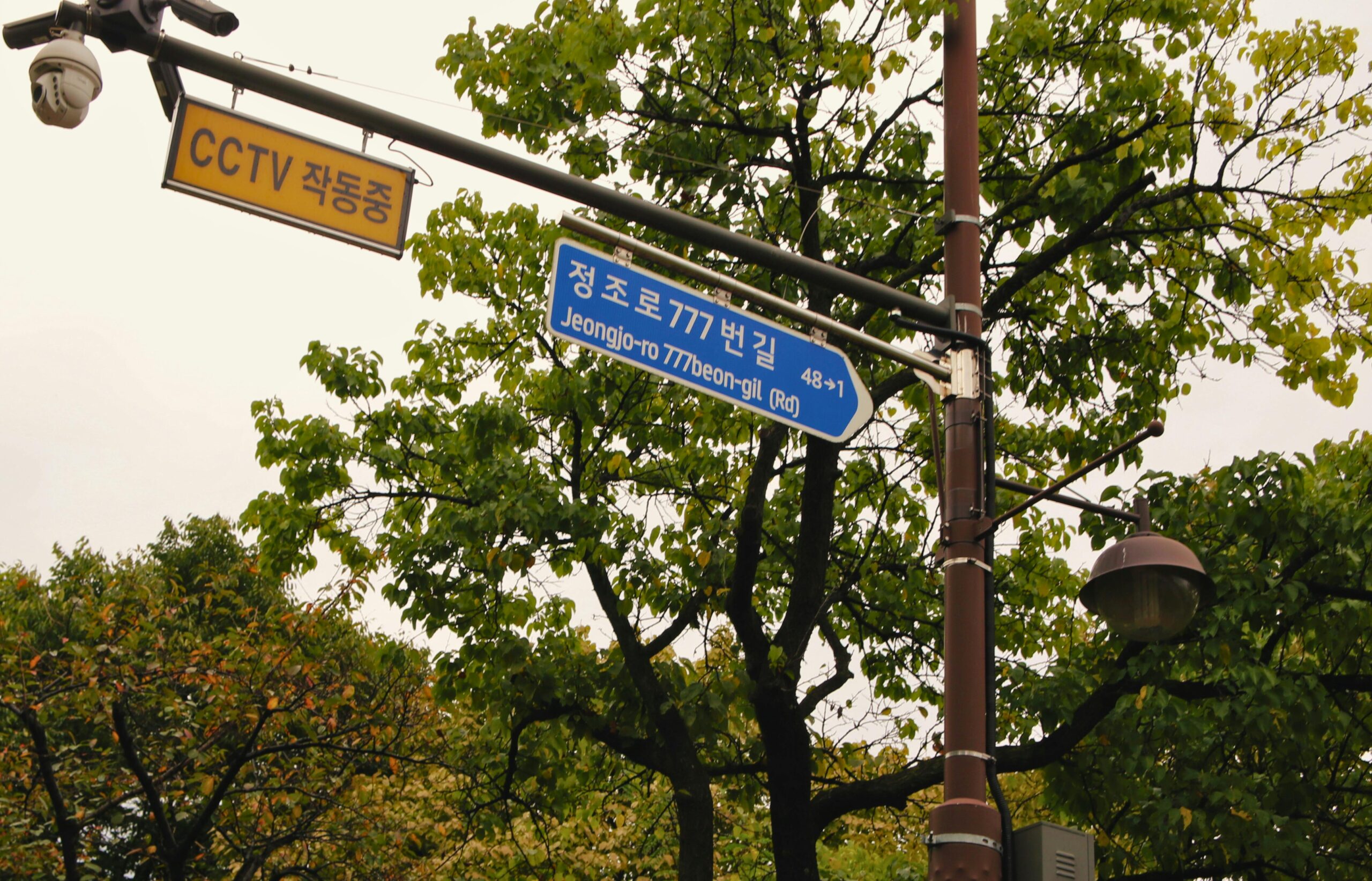
A road name address sign (도로명주소) in Suwon, South Korea — the official address standard since 2014.
Key Takeaways
- Korea officially uses the road name address (도로명주소, doromyeong juso) system, introduced in 2014.
- The older lot number address (지번주소, jibeon juso) is no longer official but is still widely recognized.
- Road name addresses follow a clear, logical structure: Province → City → Road Name + Building Number → Unit Detail.
- Always use the road name address for international shipping, visa forms, and official registrations.
- Free tools like Jusome can instantly convert or look up any Korean address in English.
The Two Korean Address Systems: A Quick Overview
South Korea officially transitioned to a new address system on January 1, 2014. Before that date, the country used a lot-based numbering system inherited from Japanese colonial-era land surveys. After 2014, the government mandated the use of road name addresses for all public and official purposes.
Here’s the key distinction in plain terms:
- Road Name Address (도로명주소): Based on the name of the road a building faces, plus a sequential building number. Logical, predictable, and internationally intuitive.
- Lot Number Address (지번주소): Based on the cadastral lot (parcel of land) a building sits on, assigned decades ago during land registration. Non-sequential, confusing for navigation.
Both addresses still appear on Korean maps, delivery apps, and navigation tools — which is why the confusion persists. But for anything official, the road name address is what you need.
What Is a Road Name Address (도로명주소)?
The road name address system was designed to make Korea’s addressing logical and consistent. Every building in the country now has an address built from the same formula, making it easy to find locations even without local knowledge.
How Road Names Work
Korean road names typically end in one of three suffixes that indicate the size of the road:
- -daero (대로): Major boulevard, usually 8 lanes or more. Example: Gangnam-daero, Teheran-ro (when written as boulevard variant).
- -ro (로): Standard road, typically 2–7 lanes. Example: Sejong-ro, Itaewon-ro.
- -gil (길): Small side street or alley, often 1 lane. Example: Insadong-gil, Garosu-gil.
Building Numbers Explained
Buildings are numbered sequentially along each road, with odd numbers on the left side and even numbers on the right side as you travel in the direction of increasing numbers. This means building 15 and building 17 are adjacent — a huge improvement over the old lot system where neighboring buildings could have completely unrelated numbers.
A full road name address looks like this:
Seoul Gangnam-gu Teheran-ro 152, 7th Floor
서울특별시 강남구 테헤란로 152, 7층
Breaking it down: Seoul (city) → Gangnam-gu (district) → Teheran-ro (road name) → 152 (building number) → 7th Floor (unit detail).
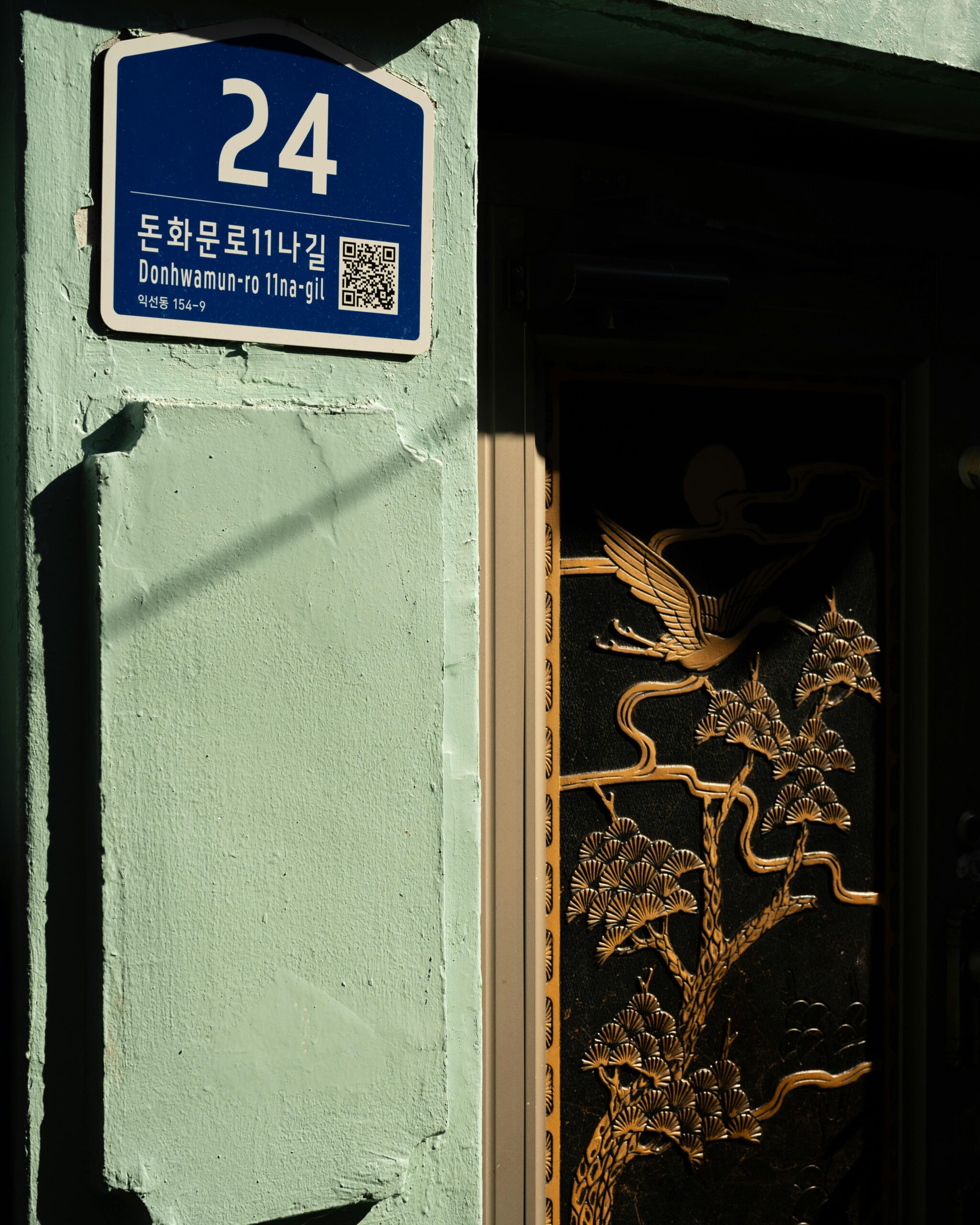 In older neighborhoods like Seoul’s hanok villages, both road name and lot number signs are sometimes displayed together.
What Is a Lot Number Address (지번주소)?
The lot number address system originated from Japan’s land cadastral survey during the colonial period (1910–1945). Under this system, every parcel of land was assigned a jibeon (지번) — a lot number. Buildings were then addressed by the lot they occupied.
A typical lot number address looks like this:
Seoul Gangnam-gu Yeoksam-dong 737-1
서울특별시 강남구 역삼동 737-1
The structure here is: Seoul → Gangnam-gu (district) → Yeoksam-dong (neighborhood/dong) → 737-1 (lot number).
Why the Lot System Was So Confusing
The lot number system had several serious problems that made it difficult — especially for foreigners and delivery services:
- Non-sequential numbering: Lot numbers were assigned historically, not geographically. Building 100 and building 101 could be on opposite sides of a neighborhood.
- Split and merged lots: When land was divided or combined over the years, you ended up with addresses like “737-1”, “737-2”, “737-18” — none of which are necessarily near each other.
- No road reference: The address gives you no clue which street a building is on, making navigation nearly impossible without local knowledge.
- Multiple addresses per building: A building could span several lots and technically have multiple valid jibeon addresses.
How to Read a Full Korean Address — Step by Step
Let’s walk through a real-world example to decode a Korean road name address completely. Here’s an address for a well-known Seoul landmark:
서울특별시 중구 세종대로 110 (태평로1가)
Seoul Junggu Sejong-daero 110 (Taepyeong-ro 1-ga)| Component | Korean | English | Meaning |
|---|---|---|---|
| Metropolitan City | 서울특별시 | Seoul | Top-level administrative unit |
| District (gu) | 중구 | Jung-gu | City district |
| Road Name | 세종대로 | Sejong-daero | Major boulevard named after King Sejong |
| Building Number | 110 | 110 | Sequential number along the road |
| Reference (dong) | 태평로1가 | Taepyeong-ro 1-ga | Old neighborhood name in parentheses (optional) |
Notice the old neighborhood name in parentheses. This is often included as a helpful reference point for locals familiar with the old system — but it’s not part of the official address.
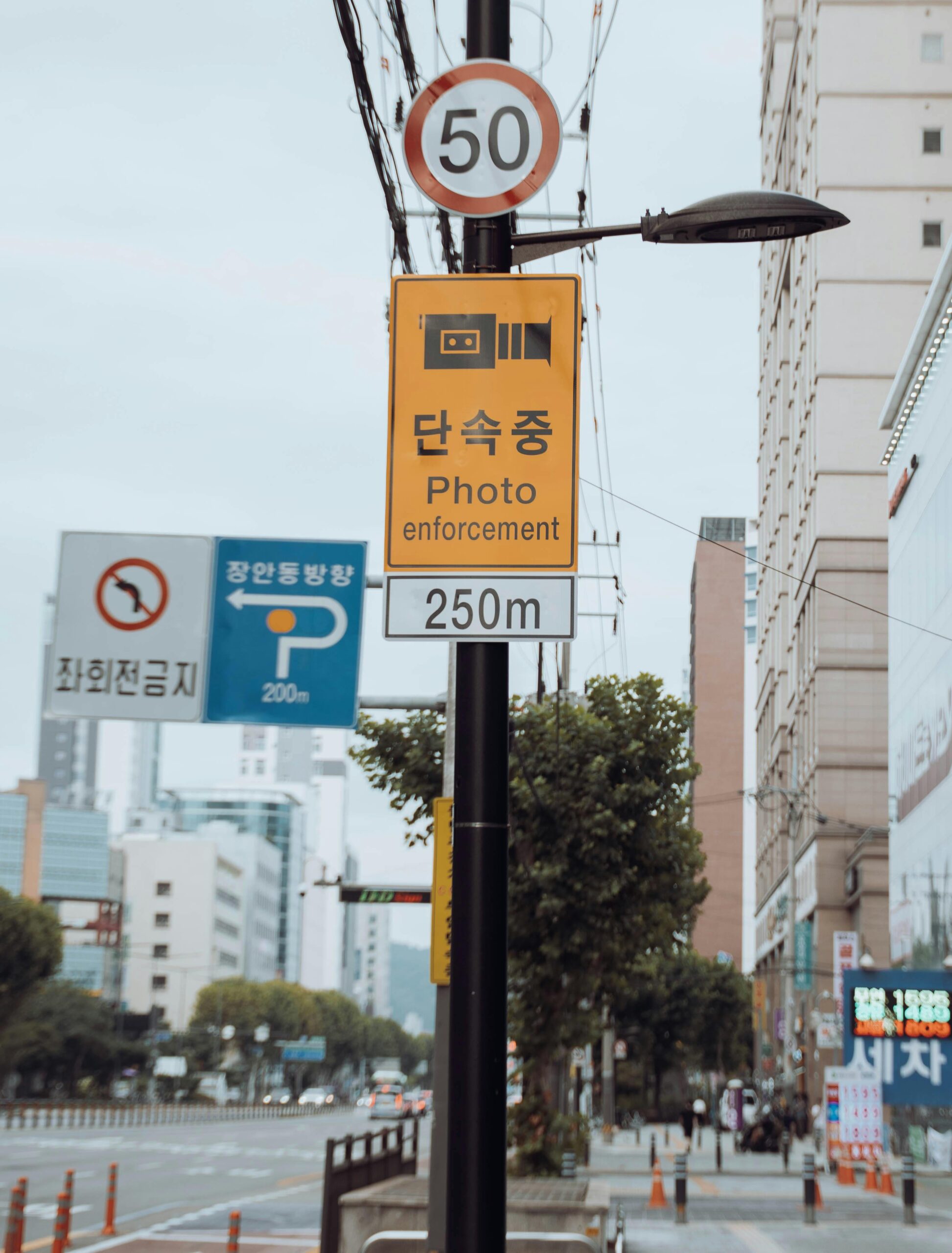 Korean road name signs are typically displayed in both Korean and Roman (English) script, making them readable for foreigners.
Road Name vs Lot Number: Side-by-Side Comparison
| Feature | Road Name Address (도로명주소) | Lot Number Address (지번주소) |
|---|---|---|
| Official status | ✅ Official standard since 2014 | ❌ Legacy, not officially used |
| Structure | Road name + building number | Neighborhood (dong) + lot number |
| Navigation | Easy — numbers are sequential | Difficult — numbers are historical |
| International use | ✅ Recommended for all international forms | Not recommended |
| On delivery apps | ✅ Primary format | Still accepted as backup |
| On Google Maps | ✅ Fully supported | ✅ Partially supported |
| For visa forms | ✅ Use this | ❌ Avoid |
| For Coupang/Naver | ✅ Primary | ✅ Also works |
Which Address Format Should You Use?
For International Shipping (Amazon, iHerb, ASOS)
Always use the road name address. International carriers like FedEx, DHL, and UPS process Korean addresses through automated systems that work best with the standardized road name format. When entering your address on a foreign e-commerce site, use this structure:
Address Line 1: [Building Number] [Road Name]
Address Line 2: [Apt/Floor/Unit], [District], [City]
Postal Code: [5-digit Korean postal code]
Country: South Korea
Example:
Address Line 1: 152 Teheran-ro
Address Line 2: 7F, Gangnam-gu, Seoul
Postal Code: 06236
For Visa Applications (US, Schengen, Japan)
Visa applications from the US Embassy, Schengen embassies, and Japan require your Korean residential address. Always provide the road name address in romanized form. Most embassy forms have a single address field — enter the full address on one line:
[Building Number] [Road Name], [District], [City] [Postal Code], Republic of KoreaFor Korean Online Shopping (Coupang, Naver Shopping)
Korean e-commerce platforms accept both formats, but they prompt you to use the road name address through their address search tool. Simply enter your road name address in the search box and select your unit number from the dropdown — the system handles the rest.
 Neighborhood road signs throughout Korea now display road names prominently, making the new system easy to follow.
Practical Tips for Foreigners Dealing with Korean Addresses
- Don’t panic about the parentheses. You’ll often see old neighborhood names in parentheses after a road name address (e.g., Teheran-ro 152 (Yeoksam-dong)). This is just a helpful reference — use only the part before the parentheses for official purposes.
- The postal code is your friend. Korea’s 5-digit postal code (우편번호) uniquely identifies your building or a small set of buildings. Including it ensures delivery even if the address romanization is slightly off.
- Romanization varies. The same road might appear as “Teheran-ro”, “Teheranno”, or “Teheran-Ro” on different forms. These all refer to the same road — Korean romanization is not 100% standardized internationally.
- Building number vs apartment number. The building number (e.g., 152) is part of the street address. Your apartment or unit number (e.g., 102동 305호) comes after, as a detail line.
- Use Jusome to convert instantly. If you have a lot number address and need the road name equivalent — or vice versa — jusome.com provides instant lookup and conversion for any Korean address in English.
Finding and Converting Korean Addresses
The Korean government’s official address database is maintained by the Ministry of the Interior and Safety and is publicly accessible. Several online tools and apps let you look up any address in either format.
For foreigners, the most practical options are:
- Jusome.com — English-language Korean address lookup, conversion, and translation tool specifically designed for international users.
- Naver Maps — Search any Korean address; displays both road name and lot number formats.
- Kakao Maps — Same functionality; widely used by locals.
- 도로명주소 공식 사이트 (juso.go.kr) — The official government address search portal (Korean language).
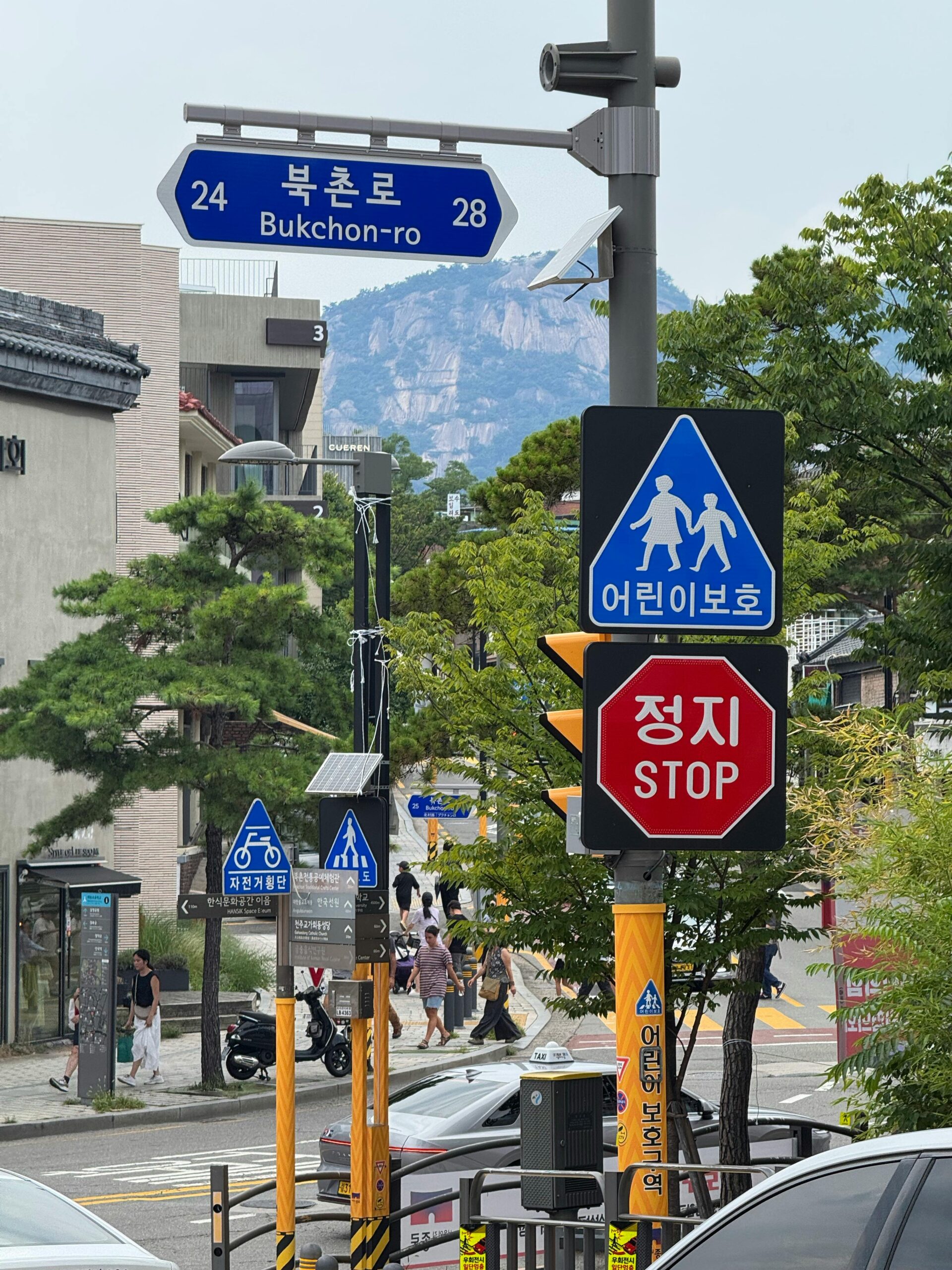 In historic areas like Bukchon Hanok Village, the new road name system overlays centuries of neighborhood history — both address formats remain part of daily life.
FAQ: Korean Address Format
Is the lot number address still valid in Korea?
Yes, the lot number address is still legally recognized for property records, real estate contracts, and some internal administrative purposes. However, for all practical uses — mail, delivery, government registration, and online forms — the road name address is the required standard.
What does “dong” mean in a Korean address?
In a lot number address, dong (동) refers to a neighborhood subdivision within a district (gu). For example, “Yeoksam-dong” is a neighborhood in Gangnam-gu. In a road name address, dong in apartment context means “building block” — a numbered block within a larger apartment complex.
How do I write a Korean apartment address in English?
Write it as: [Building Number] [Road Name], [Apartment Complex Name if applicable] [Block Number]동 [Unit Number]호, [District], [City] [Postal Code], South Korea. Example: 152 Teheran-ro, Hyundai Apt 102dong 305ho, Gangnam-gu, Seoul 06236, South Korea.
Why does Korea have two address systems?
The lot number system dates back to Japan’s colonial-era land survey (1910–1945). After independence, Korea continued using it until the inefficiencies became untenable — especially for emergency services and delivery logistics. The road name system was developed from the 1990s onward and became mandatory in 2014.
What is the correct format for a Korean postal code?
Korea uses a 5-digit postal code (우편번호) system, introduced in 2015. Every building or small cluster of buildings has a unique 5-digit code. You can find any postal code through Jusome or the official Korea Post website.
Can I use the lot number address for international shipping?
Technically possible, but not recommended. International carriers process Korean addresses through standardized databases keyed to road name addresses. Using a lot number address risks delivery delays or misrouting. Always use the road name address for anything crossing an international border.
Conclusion
Korea’s dual address system can feel overwhelming at first, but once you understand the logic, it becomes manageable. The road name address (도로명주소) is the official standard for everything from visa forms to Amazon deliveries — sequential, logical, and internationally readable. The lot number address (지번주소) is a legacy system that’s still understood locally but shouldn’t be your go-to for international purposes.
The bottom line: when in doubt, use the road name address, include the 5-digit postal code, and you’re covered. If you need to look up, convert, or translate any Korean address into English, Jusome makes it instant — no Korean language skills required.
Ready to look up your Korean address in English? Try jusome.com — free, fast, and built for international users.
What to do next
Guides for actually using your Korean address abroad.