Send Mail to Korea: Address Format for International Postal
June 02, 2026
Sending mail or packages to South Korea from overseas can feel confusing at first — the address format looks nothing like what you’re used to in the US, UK, or Europe. But once you understand the structure, addressing an envelope or parcel to Korea takes less than two minutes.
This guide covers everything you need to know: how Korean addresses work, the exact format to use on international envelopes, common mistakes that cause mail to be returned, and tips for major carriers like USPS, Royal Mail, and FedEx.
[toc]
Key Takeaways
- Korean addresses go from largest to smallest unit (province → city → district → street → building → unit)
- Always write SOUTH KOREA or REPUBLIC OF KOREA as the last line — never just “Korea”
- The 5-digit postal code must appear before the city or on its own line
- For international mail, romanize the address using the official Korean government transliteration
- USPS, DHL, FedEx, and UPS all accept the same Korean address format
How Korean Addresses Work
Korea uses a road-name address system (도로명주소) introduced nationally in 2014. Before that, lot-number addresses (지번주소) were standard — you may still encounter older formats in documents or older websites, but the road-name system is what you should use for international mail.
Components of a Korean Address
| Layer | Korean | Example |
|---|---|---|
| Province / Metropolitan City | 도 / 특별시 / 광역시 | Seoul, Busan, Gyeonggi-do |
| City / County / District (Gu) | 시 / 군 / 구 | Mapo-gu, Suwon-si |
| Sub-district (Dong) | 동 | Hapjeong-dong |
| Road name | 로 / 길 | Worldcup-ro |
| Building number | 번지 / 호 | 400 |
| Detail (unit/floor) | 동 / 호 | 101-dong, 502-ho |
| Postal Code | 우편번호 | 04116 |
For international mail purposes, you don’t need to include every administrative layer. The essential elements are: recipient name, building/street address, city, postal code, and South Korea.
International Envelope Format for South Korea
 Korean address components on an international envelope
When addressing a letter or package from outside Korea, write the address in English (romanized). Korean postal workers can read romanized addresses, and international carriers require it.
Standard Format (Recommended)
[Recipient Full Name]
[Building Name or Number], [Street Name]-ro/gil [Number]
[Dong], [Gu/District], [City]
[5-digit Postal Code]
SOUTH KOREA
Real Example: Seoul Apartment
Kim Jiyeon
Mapo-gu Worldcupbuk-ro 54, #301
Seoul 03905
SOUTH KOREA
Real Example: Busan Office Building
Park Sanghun
Haeundae-gu Centum 2-ro 55, 8F
Busan 48058
SOUTH KOREA
Real Example: Gyeonggi-do (Province)
Lee Minjung
Bundang-gu Pangyoyeok-ro 235, Apt 201
Seongnam-si, Gyeonggi-do 13494
SOUTH KOREA
Tip: When in doubt, look up the exact romanized address at jusome.com — it converts Korean addresses to the correct English format instantly.
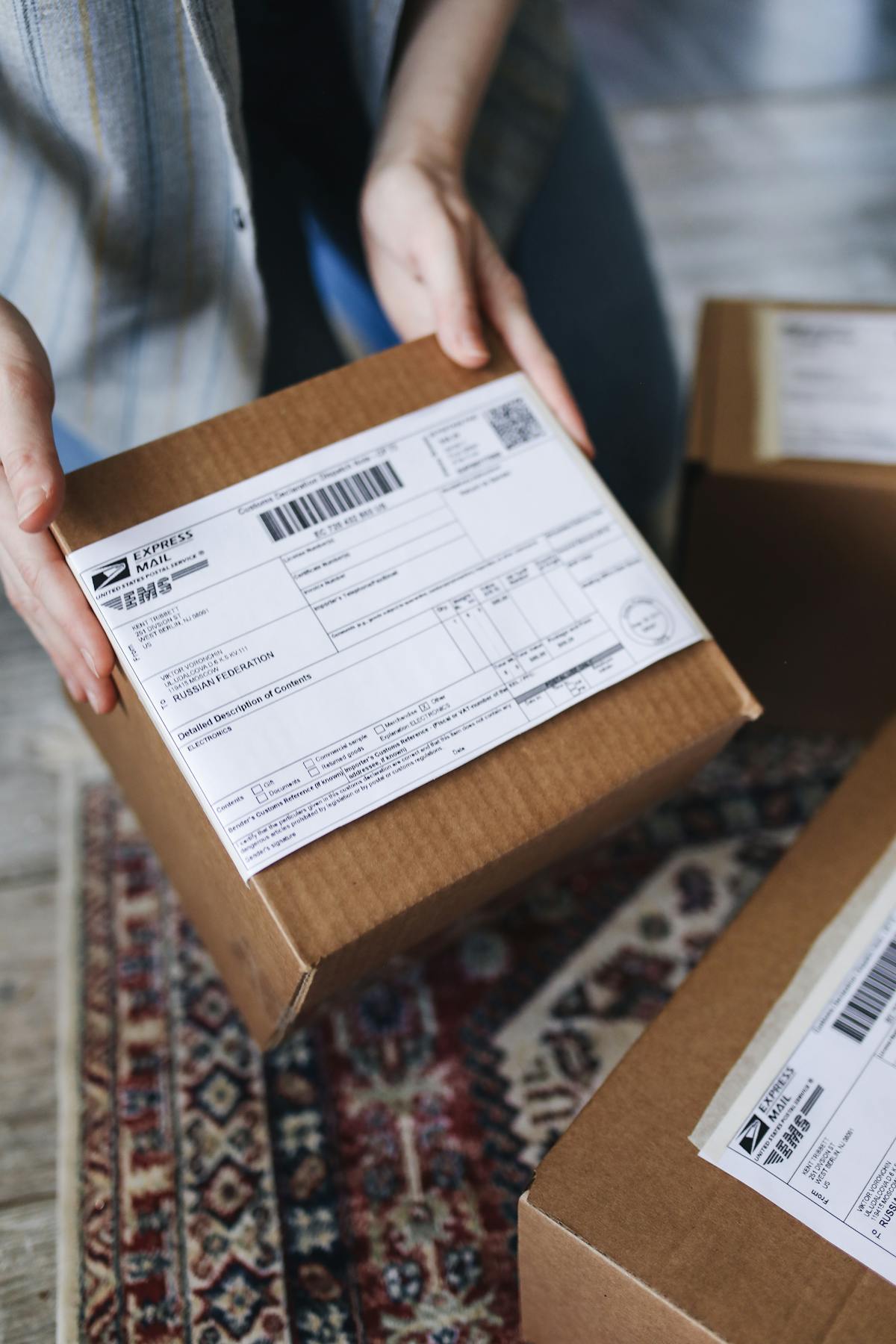 International parcel being prepared for shipment to South Korea
Finding the Korean Postal Code
Korea’s postal code system switched to a 5-digit format in 2015 (previously 6 digits). Every address in South Korea has a unique 5-digit code. It is mandatory for international mail — packages without it may be delayed or returned.
How to find the postal code:
- Korea Post (우체국) website: search.epost.go.kr — official government lookup tool
- Kakao Map / Naver Map: paste the Korean address and the postal code appears in the info panel
- jusome.com: enter the Korean address in the search bar to get the romanized version + postal code in one step
If your recipient gives you a 6-digit postal code, it is outdated. Ask them for the current 5-digit code.
Carrier-Specific Tips: USPS, Royal Mail, DHL, FedEx
 Major international carriers for shipping to South Korea
USPS (United States Postal Service)
USPS delivers to South Korea via First-Class Mail International, Priority Mail International, and Global Express Guaranteed (GXG). Enter the address exactly as shown above. In the “country” field, select South Korea (not “Korea, Republic of” — that may cause confusion).
Delivery time: 7–14 business days (First-Class), 6–10 business days (Priority Mail International).
Royal Mail (UK)
Royal Mail accepts Korean addresses in romanized form. Use their International Tracked or International Signed services for packages with tracking. Place the postal code immediately before “SOUTH KOREA” on the final line.
Delivery time: 5–7 business days (tracked airmail).
DHL Express
DHL’s online booking system has a dedicated “South Korea” country option. Enter the address in English, use the 5-digit postal code, and select KR as the country code. DHL Korea has an excellent domestic distribution network so delivery to the exact unit is reliable.
Delivery time: 2–4 business days.
FedEx International Priority
FedEx requires the street address on Line 1 and the city + postal code on Line 2. Make sure not to include Korean characters — their system may reject non-ASCII input depending on the origin country’s booking platform.
Delivery time: 1–3 business days.
5 Common Mistakes That Get Mail Returned
- Writing “Korea” alone — Always specify SOUTH KOREA or REPUBLIC OF KOREA. “Korea” is ambiguous between North and South.
- Using a 6-digit postal code — Korea updated to 5 digits in 2015. Old codes cause routing failures.
- Mixing Korean characters and English — International carriers process addresses optically (OCR). Mixed scripts cause misreads. Use only romanized English.
- Wrong street suffix — Korean road names end in -ro (major roads) or -gil (smaller streets). Using the wrong suffix or omitting it can misdirect delivery.
- Omitting the district (gu) for large cities — Seoul, Busan, Incheon, and Daegu are divided into districts (gu). Without the gu, carriers may not be able to narrow down the location.
Carrier Comparison: Sending Mail to South Korea
| Carrier | Service | Est. Delivery | Tracking | Max Weight |
|---|---|---|---|---|
| USPS | Priority Mail International | 6–10 days | Yes | 20 kg |
| USPS | First-Class Mail International | 7–14 days | Limited | 2 kg |
| Royal Mail | International Tracked | 5–7 days | Yes | 2 kg |
| DHL Express | International Priority | 2–4 days | Yes | 70 kg |
| FedEx | International Priority | 1–3 days | Yes | 68 kg |
| UPS | Worldwide Expedited | 2–5 days | Yes | 70 kg |
Romanizing Korean Addresses Correctly
Korea uses the Revised Romanization of Korean (국어의 로마자 표기법) as the official standard. This affects how place names are written in English:
- ㅓ → eo (not “u” or “ur”) — e.g., Seocho-gu, not “Sucho”
- ㅡ → eu — e.g., Eunpyeong-gu, not “Eunpyung”
- Double consonants in names may appear as aspirated forms — e.g., Mapo, Hapjeong
If you receive a Korean address from someone and need to convert it to English, use jusome.com to get the officially romanized version. This avoids guesswork that can lead to misdelivery.
Special Cases: Military Mail, PO Boxes, and University Addresses
US Military Mail (APO/FPO)
If you’re sending to a US service member stationed in Korea, use their APO/FPO address — not a Korean street address. APO AE addresses are routed through the US military postal system and handled like domestic USPS mail.
PO Boxes (사서함)
Korea Post operates PO boxes at post offices nationwide. If your recipient gives you a PO box address, format it as:
[Recipient Name]
PO Box [Number], [Post Office Name] Post Office
[City] [Postal Code]
SOUTH KOREA
University Addresses
For mail going to a student or department at a Korean university, include the university name and department after the recipient’s name, followed by the campus address. For example:
Lee Junho
Department of Computer Science
Seoul National University
1 Gwanak-ro, Gwanak-gu
Seoul 08826
SOUTH KOREA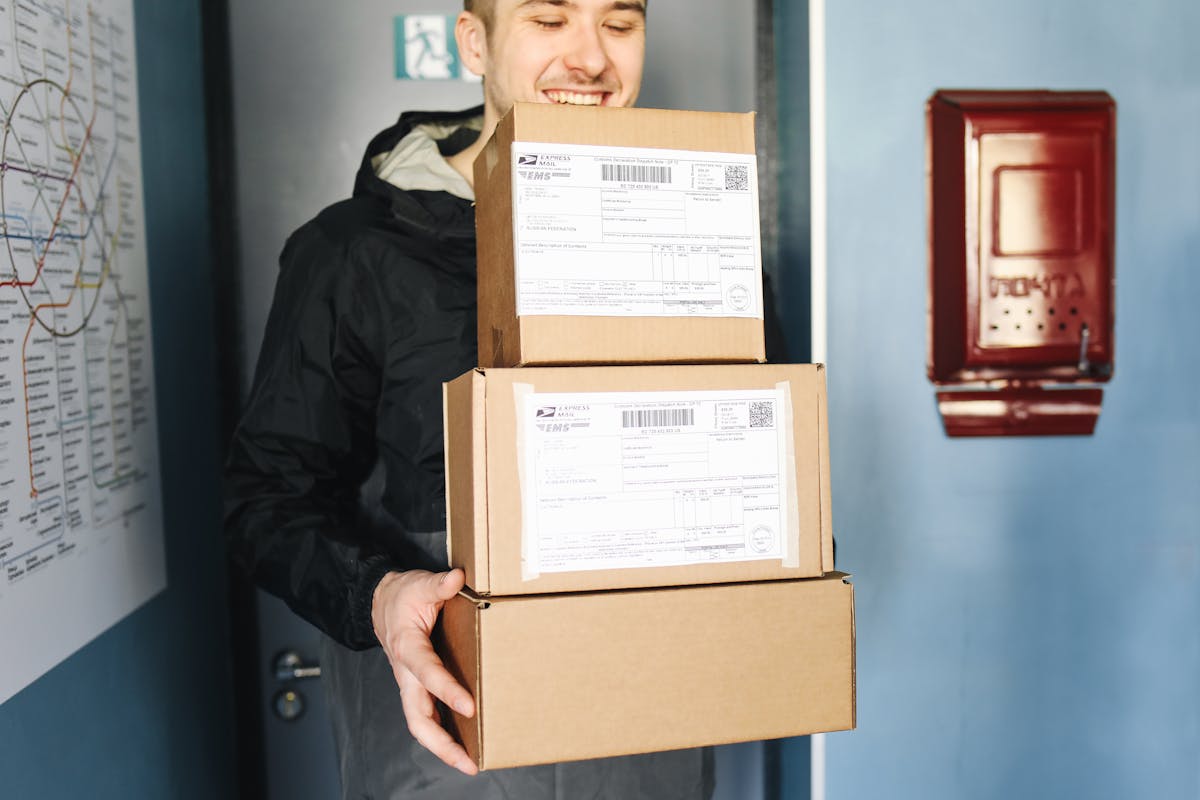 Korea Post’s 5-digit postal code system introduced in 2015
Customs Declarations for Packages
If you’re sending a package (not just a letter), you must complete a customs declaration form — usually CN22 or CN23 depending on the carrier and package value.
- CN22: For packages up to $400 / £270 / €370 in value
- CN23: For packages $400–$2,000 / over 2 kg
South Korea’s customs exemption threshold for gifts from private individuals is approximately 150,000 KRW (~$115 USD). Commercial goods shipped for purchase are subject to standard duty above $150 USD.
Tips for smooth customs clearance:
- Describe contents accurately — “clothing,” “books,” “electronics” are accepted; vague descriptions like “gift” alone are flagged
- Include the recipient’s Korean phone number if possible — customs agents will call if clarification is needed
- Food, agricultural products, and pharmaceuticals have strict import restrictions in Korea
Frequently Asked Questions
Can I write the address in Korean on an international envelope?
You can include the Korean address in smaller text alongside the English romanized version, but the main address must be in English for international carriers to process it. Write the English version prominently and clearly.
What if I don’t know the postal code?
Ask your recipient for the exact 5-digit code. If that’s not possible, search Korea Post’s official address lookup at search.epost.go.kr or use jusome.com to find it from the Korean address text.
Is “Republic of Korea” the same as “South Korea” on envelopes?
Yes — both are accepted by postal systems worldwide. “SOUTH KOREA” is clearer and less likely to cause confusion. Avoid “Korea” alone.
How long does standard airmail from the US take to reach South Korea?
USPS First-Class Mail International typically takes 7–14 business days. Priority Mail International averages 6–10 business days. Express services (GXG, FedEx, DHL) deliver in 1–4 business days.
Do I need to write anything in Korean on the envelope?
No. A fully romanized English address is sufficient. Korea Post handles international mail in English as a standard operation.
What if the building has a Korean-only name?
Romanize the building name using the Revised Romanization standard. For large well-known buildings, an English translation is also widely accepted (e.g., “Seoul Station” instead of “서울역”). When in doubt, omit the building name and rely on the street address and unit number — that is sufficient for delivery.
Conclusion
Sending mail to South Korea is straightforward once you know the address structure. Use the road-name format in romanized English, include the 5-digit postal code, and always write SOUTH KOREA as the final line. Whether you’re using USPS, Royal Mail, DHL, or FedEx, this format works across all carriers.
If you have a Korean address in Hangul and need it converted to English quickly, jusome.com handles the translation and romanization in seconds — no manual lookup needed.
Schema Markup
What to do next
Guides for actually using your Korean address abroad.