Korean Excise Tax on Imported Alcohol: Complete Guide 2026
July 08, 2026
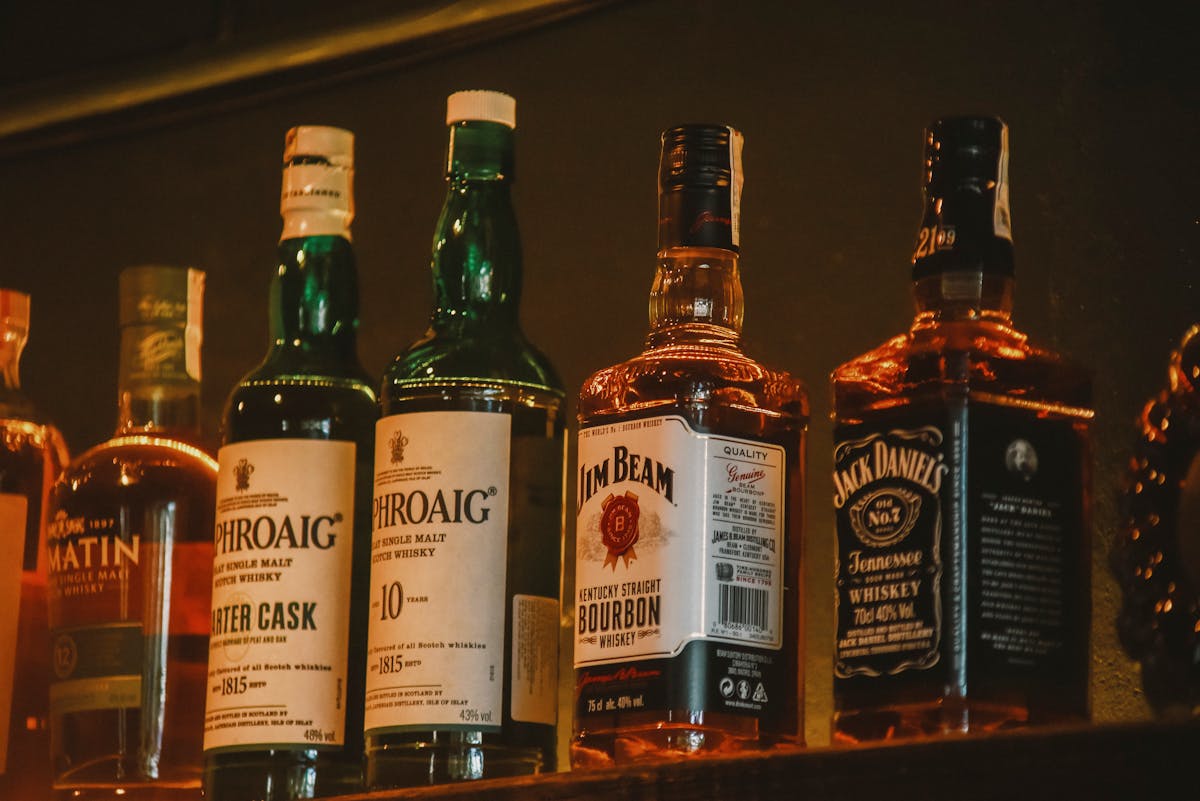
Ever wonder why a bottle of Scotch whisky costs nearly twice as much in Seoul as it does in London? The answer lies in Korea’s multi-layered excise tax system for imported alcohol — a structure unchanged at its core for over two decades. Whether you’re a frequent traveler bringing a bottle home, an expat stocking your liquor cabinet, or an international shopper curious about duty charges, understanding how Korea taxes imported alcohol can save you significant money.
[toc]
Key Takeaways
- Korea applies four stacked taxes on imported alcohol: customs duty, liquor tax, education tax, and VAT — effective burden up to 155% on spirits.
- Liquor tax is 72% for distilled spirits (whiskey, brandy, rum) and 30% for wine — ad valorem on CIF + customs duty.
- Beer switched to volume-based taxation in 2020, currently 885.7 KRW per liter.
- KORUS and Korea-EU FTAs eliminated customs duties on wine and spirits — but liquor tax, education tax, and VAT still apply.
- Travelers get a duty-free allowance of 1 bottle (max 1L, max USD 400).
Korea’s Alcohol Tax System: An Overview
Korea’s ad valorem liquor tax applies to the product price, making premium imported spirits significantly more expensive than in their home markets.
South Korea’s taxation of alcoholic beverages is governed by the Customs Act (관세법) for import duties and the Liquor Tax Act (주세법) for domestic excise taxation. When an imported bottle clears Korean customs, it passes through four sequential tax layers before reaching the consumer.
This system has deep historical roots. Before 1991, the total tax burden on imported distilled spirits reached 280% — composed of a 200% liquor tax, 30% national defense tax, and 10% education tax. Reforms reduced the liquor tax to 100% in 1996 and then to the current 72% in 2000. Despite ongoing discussions, the ad valorem structure remains intact for spirits and wine.
The Four-Layer Tax Structure
1. Customs Duty (관세)
The first layer is the import tariff on the CIF (cost + insurance + freight) value. Korea’s MFN tariff rate for most distilled spirits is approximately 20%. Free trade agreements have eliminated these duties for major partner countries:
- KORUS FTA (US–Korea): Wine duties eliminated March 2012; beer 2018; spirits fully eliminated by 2021.
- Korea–EU FTA: Wine and spirits duties fully removed by 2016.
- Korea–Australia FTA, Korea–Canada FTA: Include phased-out tariffs on wine and spirits.
A bottle of French Bordeaux or Kentucky bourbon imported commercially today enters Korea duty-free under the applicable FTA — but the domestic excise layers still apply in full.
2. Liquor Tax (주세)
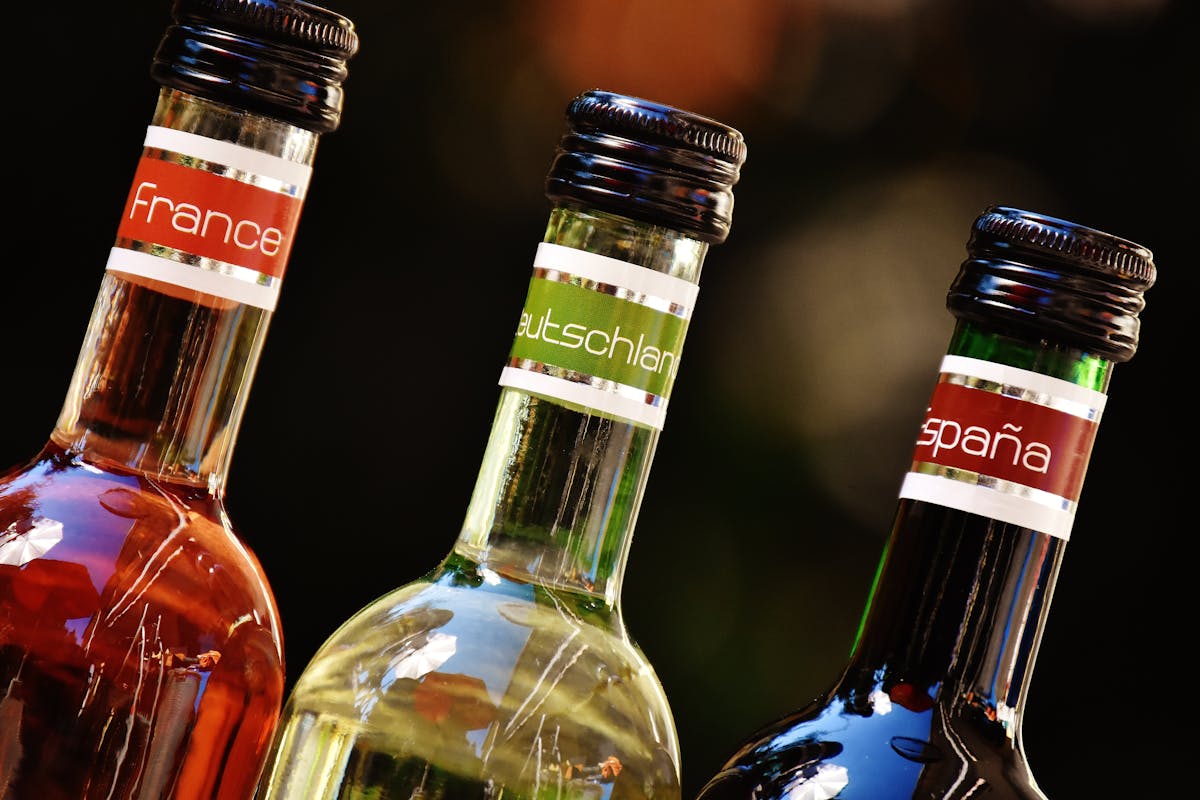 Wine faces a 30% liquor tax in Korea — calculated ad valorem on the CIF price plus any applicable customs duty.
The liquor tax is the most significant layer, defined under the Liquor Tax Act (주세법, effective May 17, 2024 revision). Rates by category:
- Distilled spirits (whiskey, brandy, rum, gin, vodka): 72% of tax base (CIF + customs duty)
- Wine and fruit wine: 30% of tax base
- Beer (맥주): Volume-based — 885.7 KRW per liter (2024 rate, adjustable within ±30%)
- Makgeolli (막걸리): Volume-based at a separately set annual rate
- Ethyl alcohol / spirits base: 57,000 KRW per kiloliter (plus 600 KRW per percent above 95% ABV)
The ad valorem mechanism means luxury packaging and branding directly inflate the tax bill. A premium 18-year-old Scotch pays 72% on a much higher base price than a standard blend — generating a proportionally larger tax in absolute terms.
3. Education Tax (교육세)
The education tax is a surtax on the liquor tax itself:
- Distilled spirits, wine, fruit wine: 30% of the liquor tax amount
- Soju (소주) and liqueur: 10% of the liquor tax amount
For imported whiskey at 72% liquor tax, the education tax adds another 21.6 percentage points (30% x 72%) to the effective burden — compounding on top of the already-taxed base.
4. Value Added Tax (부가가치세, VAT)
Korea’s standard 10% VAT is applied to the sum of CIF value, customs duty, liquor tax, and education tax. Because VAT is assessed on the already-taxed subtotal, it effectively taxes the taxes — the final compounding layer.
Tax Rate Comparison by Alcohol Category
| Category | Customs Duty (MFN) | Liquor Tax | Education Tax | VAT | Approx. Total |
|---|---|---|---|---|---|
| Distilled Spirits (whiskey, brandy, rum) | ~20% (0% FTA) | 72% ad valorem | 30% of liquor tax | 10% | ~155% (MFN) / ~120% (FTA) |
| Wine / Fruit Wine | ~15-20% (0% FTA) | 30% ad valorem | 30% of liquor tax | 10% | ~68% above CIF (FTA) |
| Beer (맥주) | ~30% (0% FTA) | 885.7 KRW/liter (2024) | 10% of liquor tax | 10% | Varies by price |
| Makgeolli (막걸리) | ~270% MFN | Volume-based (annual) | 10% of liquor tax | 10% | Varies |
| Soju 소주 (domestic ref.) | N/A | 72% ad valorem | 10% of liquor tax | 10% | ~88% above factory price |
Step-by-Step Tax Calculation Examples
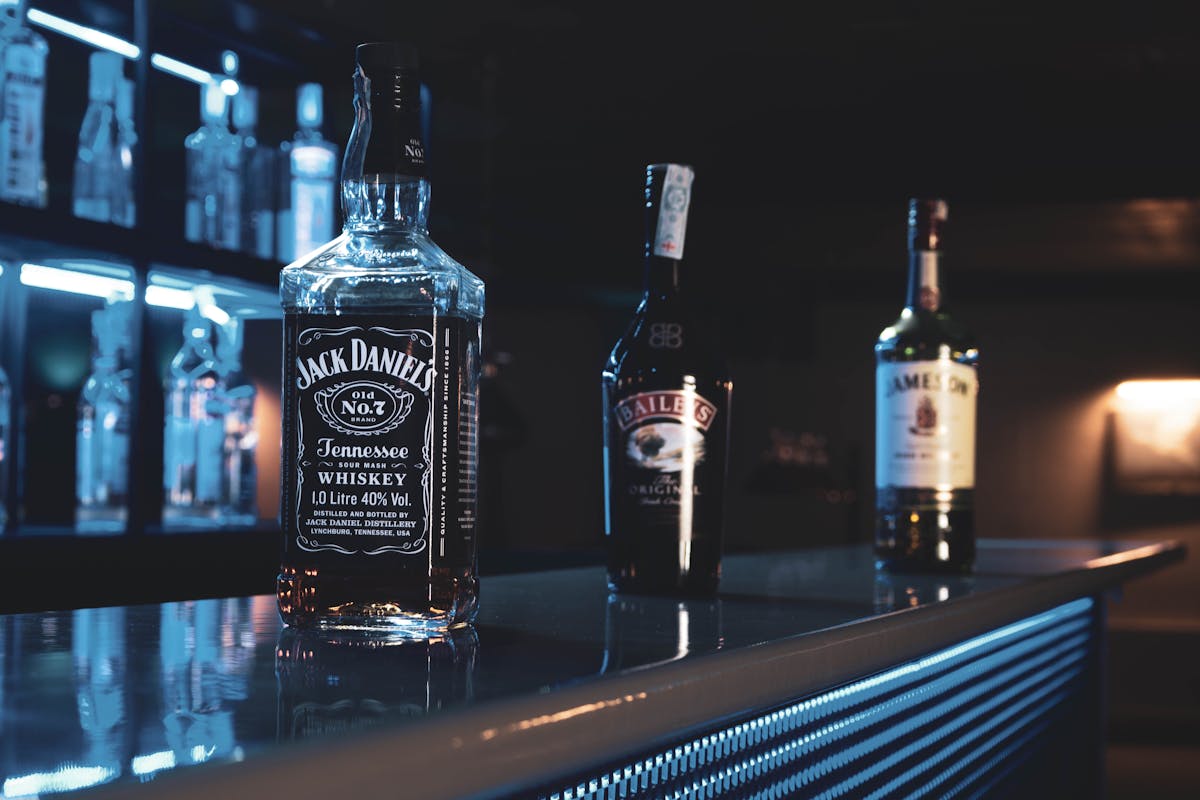 Seoul bar display — imported spirits typically retail for 1.5-2x their UK or US price due to Korea’s stacked tax structure.
Example A: USD 100 Bottle of Scotch Whisky (UK, MFN Rate)
- CIF value: USD 100 (approx. 136,000 KRW at 1,360 KRW/USD)
- Customs duty (20% MFN): 27,200 KRW — Subtotal: 163,200 KRW
- Liquor tax (72% x 163,200): 117,504 KRW
- Education tax (30% x 117,504): 35,251 KRW
- Pre-VAT subtotal: 315,955 KRW
- VAT (10%): 31,596 KRW
- Total landed cost: approx. 347,551 KRW (approx. USD 255) — 155% effective tax rate on CIF value
Example B: USD 30 Bottle of French Wine (EU, 0% FTA Rate)
- CIF value: USD 30 (approx. 40,800 KRW)
- Customs duty (0% Korea-EU FTA): 0 KRW
- Liquor tax (30% x 40,800): 12,240 KRW
- Education tax (30% x 12,240): 3,672 KRW
- Pre-VAT subtotal: 56,712 KRW
- VAT (10%): 5,671 KRW
- Total landed cost: approx. 62,383 KRW (approx. USD 46) — 53% total tax rate above CIF
These calculations use illustrative exchange rates. Actual customs assessments use the Bank of Korea reference rate at the time of clearance.
Duty-Free Allowance for Travelers Entering Korea
 Incheon International Airport — Korea’s main international gateway where customs duties on excess alcohol are collected.
Per the Korea Customs Service official guide, travelers entering Korea are entitled to this duty-free personal exemption for alcohol:
- Quantity: 1 bottle only
- Volume: Not more than 1 liter
- Value: Not more than USD 400
- Age restriction: Travelers under age 19 do not qualify
This sits within your total personal effects allowance of USD 600. If your bottle exceeds either limit, the entire bottle becomes dutiable. Voluntarily declaring excess items at customs provides a 30% tax reduction (up to 150,000 KRW) versus the penalty rate for undeclared items.
Recent Changes to Korea’s Liquor Tax System
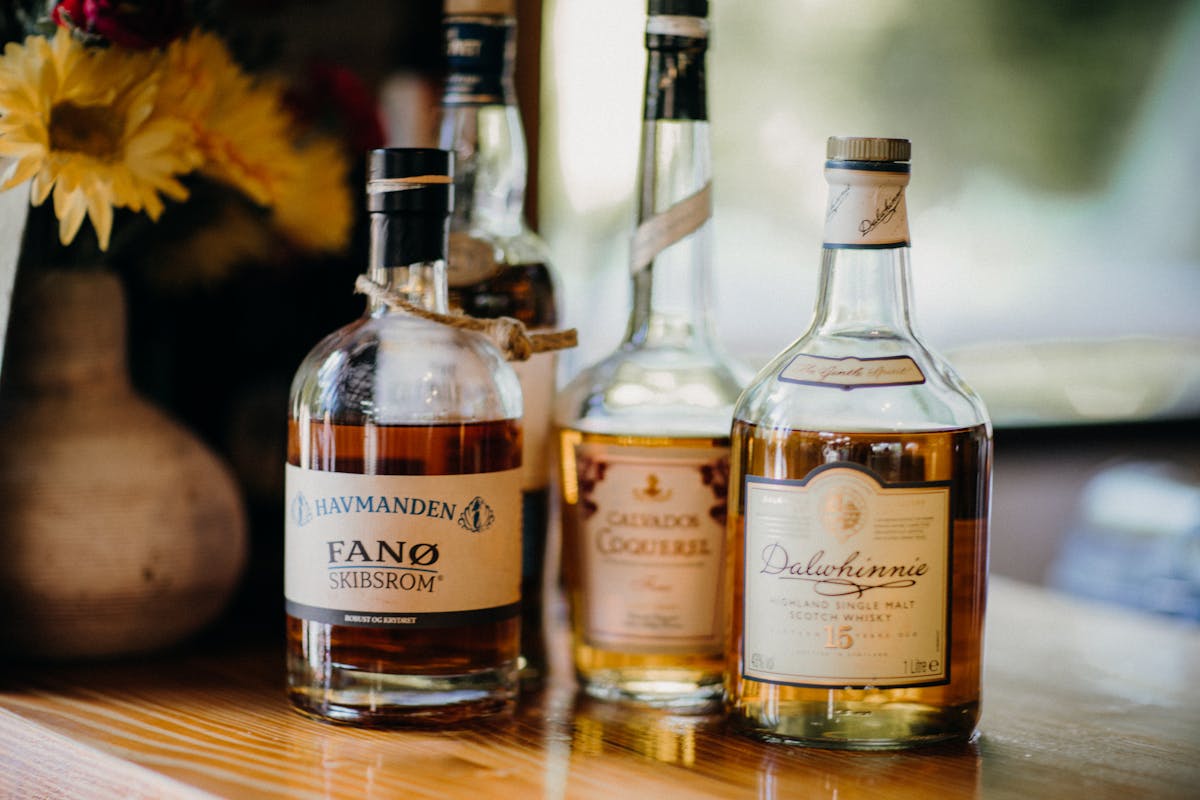 The 2020 shift to volume-based taxation for beer was the first structural change to Korea’s liquor tax in 50 years.
The most significant reform in decades came in January 2020, when Korea converted beer (맥주) and makgeolli (막걸리) from ad valorem to volume-based taxation. Under the old system, imported beer — with its higher declared price — paid more liquor tax per liter than equivalent domestic beer. The switch to a per-liter rate (830.3 KRW/liter initially) leveled the competitive field.
The rate was adjusted to 885.7 KRW per liter in April 2023 following CPI-linked revision. A July 2024 regulatory change replaced automatic annual CPI indexing with government discretion to adjust within a +/-30% band — providing more pricing stability.
For wine and spirits, the ad valorem structure remains unchanged. The May 2024 revision of the Liquor Tax Act kept the 72% rate for distilled spirits and 30% for wine. Discussions about extending volume-based taxation to spirits have not resulted in legislation as of 2026.
FAQ: Korea Excise Tax on Imported Alcohol
Why is whiskey so expensive in Korea?
Whiskey faces approximately 155% in combined taxes under MFN rates: 20% customs duty, 72% ad valorem liquor tax, 21.6% education tax (30% of liquor tax), and 10% VAT compounded on all layers. Even under FTAs that eliminate customs duty, the remaining stack totals roughly 120% above CIF value. Premium packaging further inflates the ad valorem tax base.
How much alcohol can I bring into Korea duty-free?
The Korea Customs Service allows 1 bottle not exceeding 1 liter and valued at no more than USD 400, within your total USD 600 personal effects exemption. Travelers under 19 are not eligible.
Does the KORUS FTA eliminate all alcohol taxes?
No. KORUS eliminated only the customs import duty on wine (2012), beer (2018), and spirits (by 2021). The domestic excise taxes — liquor tax, education tax, and VAT — apply equally to domestic and imported products and are not affected by any FTA.
Is wine taxed less than spirits in Korea?
Yes. Wine carries a 30% liquor tax vs. 72% for spirits. Under FTA rates, the total effective tax on wine is approximately 53% above CIF. For FTA-country whiskey it is roughly 120% above CIF.
Can I order alcohol via international direct purchase (해외직구)?
Alcohol does not qualify for Korea’s USD 150 de minimis exemption (목록통관). It requires formal customs clearance with the full tax stack applied: customs duty + liquor tax + education tax + VAT.
Sources / 참고 자료
- Liquor Tax Act (주세법) — Korea Legislation Research Institute (KLRI) English Database — Official English translation including all rate schedules
- Duty-Free Allowance for Travelers — Korea Customs Service (관세청) Official Guide — Official traveler allowance limits for alcohol
- Why Are Whiskey Prices So High in Korea? — The Korea Herald / The Investor — Breakdown of the 155% effective tax on imported spirits
- South Korea Adopts Volume-Based Liquor Tax for Beer — USDA Foreign Agricultural Service — Official USDA report on the 2020 beer tax reform
- South Korea Import Tariffs — U.S. International Trade Administration — Korea tariff structure overview including FTA impacts
- Korea to Review Liquor Tax System Amid Inflation — The Korea Herald — Government discussions on potential ad valorem reform
- DS75: Korea — Taxes on Alcoholic Beverages — World Trade Organization — WTO dispute records on Korea’s alcohol tax history
본 글은 위 공식 출처에서만 정보를 인용하여 작성되었습니다. 세율 및 규정은 변경될 수 있으니 최신 정보는 관세청(customs.go.kr) 및 국세청(nts.go.kr) 공식 사이트에서 확인하세요.
What to do next
Guides for actually using your Korean address abroad.