
Korean D-10 Job-Seeking Visa: Complete Address Requirements Guide (HiKorea Official)
July 20, 2026
If you are a foreign graduate looking to find work in South Korea, the D-10 job-seeking visa is your gateway. But one question trips up almost every applicant: what address documents do you actually need, and when?
This guide breaks down the exact address requirements for the D-10 visa — whether you are applying at a Korean consulate overseas or changing your status inside Korea — based on official Korean Ministry of Justice immigration regulations published on HiKorea (hikorea.go.kr).
The D-10 visa gives foreign graduates up to one year to find employment in Korea. Source: Pexels
Key Takeaways
- Overseas applicants must show proof of legal residence in the consulate’s jurisdiction (lease, utility bill, or government ID with address).
- In-Korea applicants (status change) must submit a Korean accommodation certificate: lease contract, lodging confirmation, or host declaration.
- If you stay more than 90 days, you must complete Alien Registration within 90 days of entry and provide a Korean residential address.
- Any address change in Korea must be reported to immigration within 14 days of moving.
- Your Korean address must be in the official road-name address (도로명주소) format for all immigration documents.
What Is the Korean D-10 Job-Seeking Visa?
The D-10 visa (구직비자) is a non-immigrant visa issued by the Republic of Korea’s Ministry of Justice that allows eligible foreign graduates to remain in Korea while actively searching for employment. It is not a work visa itself — you cannot work on D-10 — but it bridges the gap between finishing school or a previous work visa and obtaining an E-series employment visa.
The visa is valid for up to 6 months initially and can be extended for a total stay of up to 1 year. All D-10 applications and renewals are processed through Korean immigration offices or online via the HiKorea portal.
Who Qualifies for a D-10 Visa?
According to the Korean Ministry of Justice’s immigration regulations (출입국관리법 시행령), the D-10 visa is available to the following categories of foreign nationals:
- Korean university graduates: Foreign nationals who completed a bachelor’s degree or higher at an accredited Korean university.
- Overseas university graduates with TOPIK: Graduates of overseas universities who hold TOPIK (Test of Proficiency in Korean) Level 4 or higher.
- Government scholarship recipients: Graduates who received a Korean Government Scholarship Program (KGSP) or similar government-funded scholarship.
- Former E-visa holders: Individuals who previously held an E-1 through E-7 employment visa and need time to secure a new employer.
- Designated training program graduates: Graduates of specific Korean government-approved overseas training programs.
 D-10 visa holders can attend job fairs and interviews while legally residing in Korea. Source: Pexels
Address Requirements: Applying at a Korean Consulate Overseas
If you apply for a D-10 visa at a Korean embassy or consulate outside Korea, you must demonstrate that you are a legal resident in that consulate’s jurisdiction. Korean consulates are divided by geographic region, and each consulate only accepts applications from residents within its assigned area.
Acceptable Address Proof Documents (Overseas Application)
| Document Type | Requirements | Notes |
|---|---|---|
| Lease / Rental Agreement | Shows applicant’s name and current address | Most commonly accepted |
| Government-Issued Photo ID | Driver’s license or national ID with home address | Must be valid and current |
| Utility Bill | Electricity, gas, or water bill in applicant’s name | Must be dated within 3 months |
| Bank Statement | Shows name and address on file | Must be official (not a screenshot) |
| Valid Residence Permit | Showing legal status in the country | e.g., student visa, work permit |
Important: You must apply at the consulate that covers your current place of residence — not simply the nearest Korean consulate. For example, if you live in Los Angeles, you apply at the Korean Consulate General in Los Angeles, not the Embassy in Washington D.C. Always confirm the jurisdiction boundaries on the consulate’s official website before submitting your application.
Address Requirements: Applying Within Korea (Status Change)
Many applicants are already in Korea on a student visa (D-2) or research visa (D-3) and wish to change their status to D-10 after graduation. In this case, you apply at a local Korean immigration office (출입국관리사무소), and you must provide proof of your current Korean address.
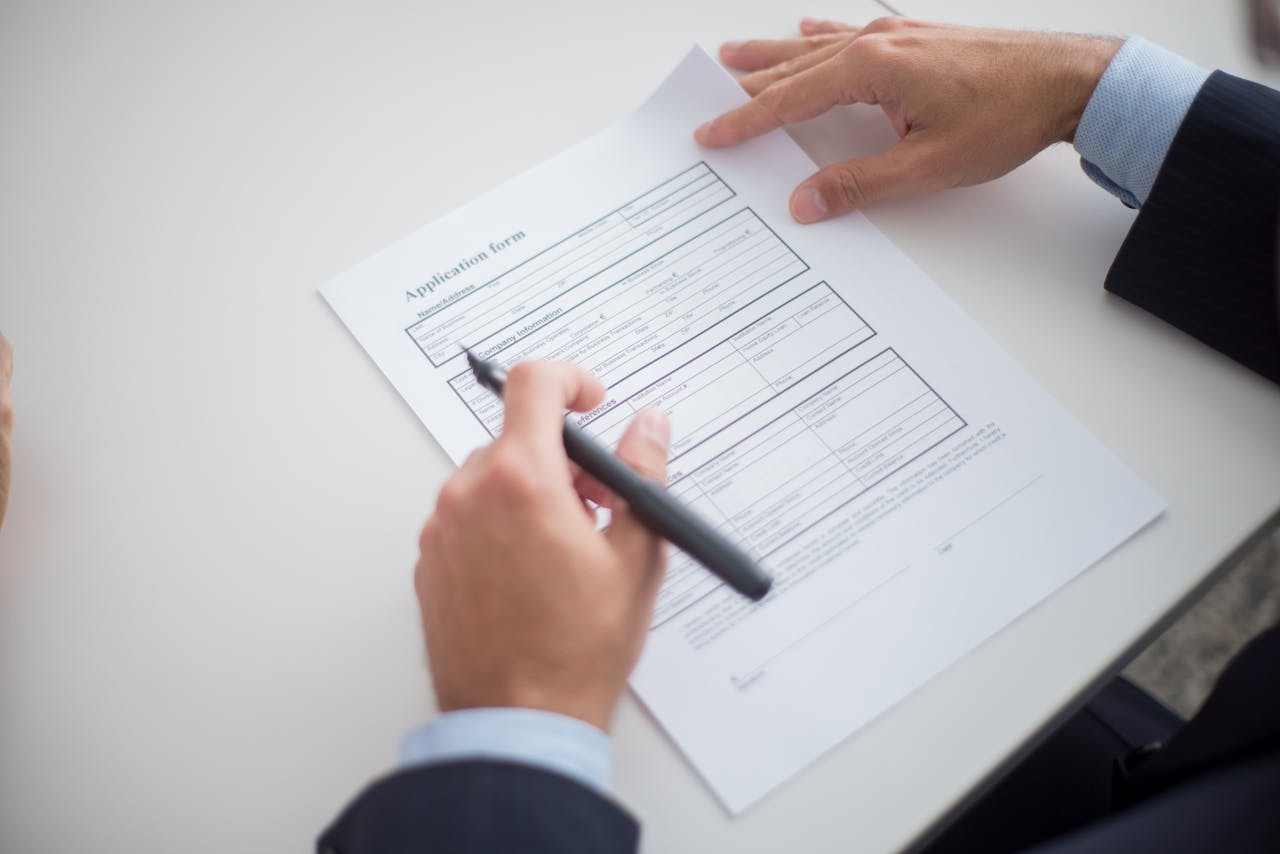 When applying inside Korea, you must bring accommodation proof to the immigration office. Source: Pexels
Acceptable Korean Accommodation Proof Documents
- Lease / Rental Agreement (임대차계약서): The most commonly accepted document. Must show the property address, your name as the tenant, and the lease period. A copy is usually sufficient, but bring the original for inspection.
- Accommodation Confirmation Certificate (숙박사실확인서): Required if you are staying at a hostel, guesthouse, company dormitory, or university dormitory. This certificate is issued by the accommodation provider and must show the facility’s official address and your stay period.
- Host Declaration (거주사실확인서): If you are living with a Korean national or a foreigner who holds a long-term visa, the host can provide a written declaration confirming your residence at their address. The host must co-sign the declaration.
- Hotel Invoice or Receipt: Acceptable for very short-term or transitional stays. Must show the hotel’s official Korean address and your name. Not recommended for extensions — immigration may ask you to provide more stable accommodation proof.
Pro tip from Jusome: Your accommodation address on the application form must match the address on your proof document exactly, including the correct road-name address (도로명주소) format. If your lease shows an old lot-number address (지번주소), verify the road-name equivalent using the official Juso.go.kr address search service before submitting.
Alien Registration: Korean Address After Entering on D-10
Once you enter Korea on a D-10 visa and plan to stay longer than 90 days, you are legally required to complete Alien Registration (외국인등록) within 90 days of your entry date. This is a separate process from the visa application itself.
Alien Registration Address Requirements
- Submit your application at the local immigration office that covers your Korean residential district.
- Provide proof of your Korean address — the same documents listed above (lease agreement, accommodation certificate, etc.).
- Your registered address will appear on your Alien Registration Card (ARC / 외국인등록증).
- This ARC address is your official Korean address used for banking, mobile phone contracts, and government services.
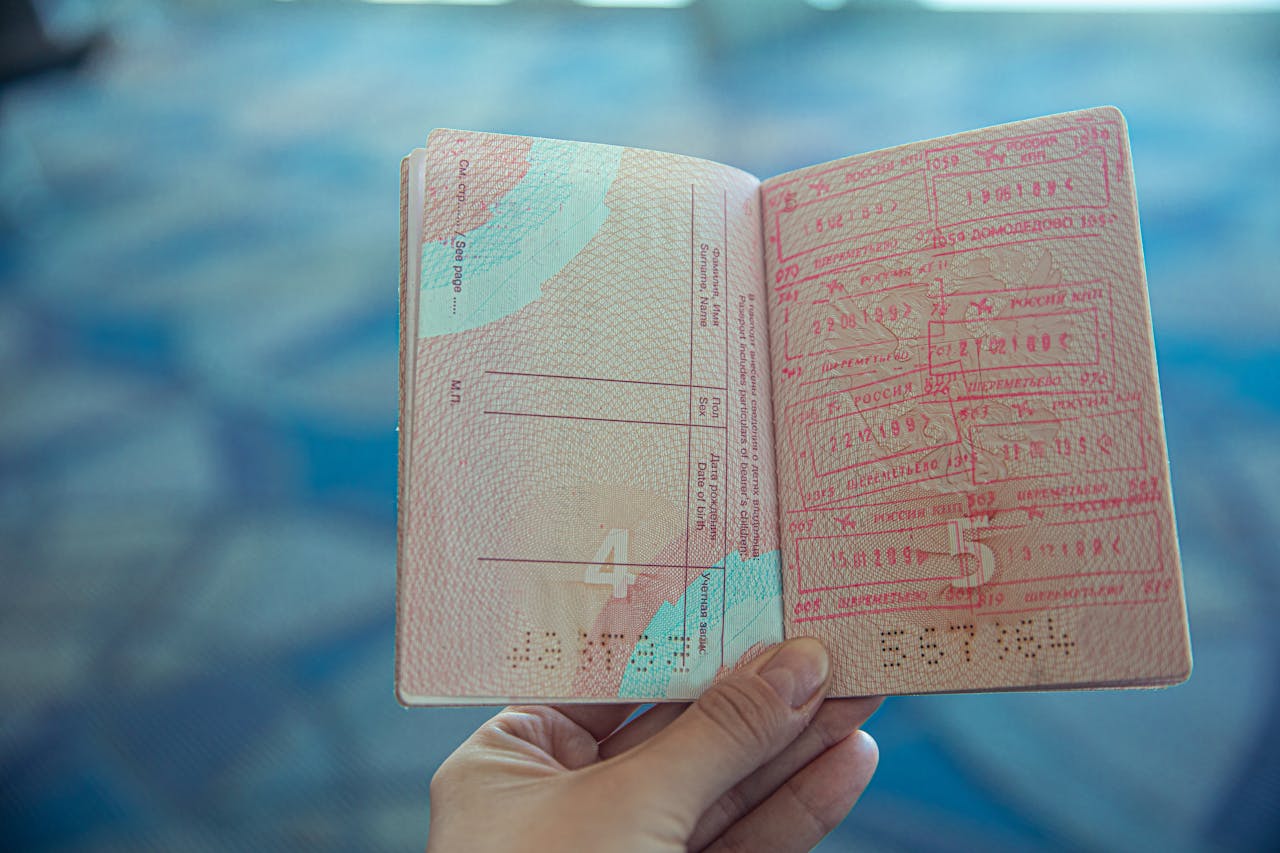 Your passport will be stamped upon entry to Korea with your visa type and entry date. Source: Pexels
Reporting an Address Change on D-10
Korean immigration regulations require that all foreign nationals — including D-10 visa holders — report any change of residential address within 14 days of moving. Failure to report an address change is a violation of the Immigration Control Act and can result in fines or complications when renewing or changing your visa status.
How to Report an Address Change
- Online via HiKorea (hikorea.go.kr): Log in with your Alien Registration number and update your address in the “Change of Address” section. You will need to upload a scan of your new accommodation proof.
- In person at a local immigration office: Bring your ARC, passport, and proof of new address. Processing is usually same-day.
- At a local community center (주민센터): Some community centers can process address change notifications on behalf of immigration for registered foreign nationals.
Korean Address Format for D-10 Applications
All immigration documents in Korea require addresses in the official road-name address format (도로명주소), which replaced the older lot-number system (지번주소) as the legal standard. Here is the structure:
Korean format:
[도/시] [시/군/구] [도로명] [건물번호], [상세주소]
Example:
서울특별시 마포구 월드컵북로 396, 201호
English transliteration:
201, 396 Worldcupbuk-ro, Mapo-gu, Seoul, Republic of Korea (04065)
If you are unsure of your property’s road-name address, use the Juso.go.kr address search service (juso.go.kr) operated by the Ministry of the Interior and Safety. Enter any part of the address to retrieve the official format. The Jusome address conversion tool at jusome.com also helps format Korean addresses into English for international use.
Full D-10 Visa Document Checklist
| Document | Overseas Application | In-Korea Status Change |
|---|---|---|
| Valid Passport (6+ months remaining) | ✅ Required | ✅ Required |
| Visa Application Form (Form 17) | ✅ Required | ✅ Required |
| Passport Photo (3.5cm × 4.5cm) | ✅ Required | ✅ Required |
| Application Fee | ✅ Required | ✅ Required |
| Graduation Certificate + Transcript | ✅ Required | ✅ Required |
| Proof of Address in Home Country | ✅ Required | ❌ Not applicable |
| Proof of Korean Accommodation | ❌ Not applicable | ✅ Required |
| Financial Statement (Bank) | ✅ Required | ✅ Required |
| Health Insurance Certificate | Recommended | ✅ Required |
| TOPIK Certificate (if applicable) | If applicable | If applicable |
Frequently Asked Questions (FAQ)
Can I use a friend’s address for my D-10 visa application in Korea?
Yes, but only if you are actually living there and the friend provides a signed Host Declaration (거주사실확인서) confirming your residence. Using an address where you do not actually reside constitutes false declaration to immigration authorities, which is a serious violation of the Immigration Control Act.
What if I am staying in a short-term rental (Airbnb) while applying for D-10?
Short-term rentals can be problematic because they often cannot provide an official accommodation certificate. Immigration offices generally prefer lease contracts of at least 1 month. If you are in a short-term rental, contact your local immigration office in advance to confirm what documentation they will accept in your specific situation.
Does my D-10 visa application have to go to the immigration office in my district?
For in-Korea applications, you can apply at any immigration office nationwide — you are not restricted to the one covering your district. However, your Alien Registration application and address change notifications should be filed at the immigration office or community center covering your registered Korean address.
What happens if I move to a new address before my D-10 is approved?
If your address changes after submitting your application but before approval, notify the immigration office in writing as soon as possible with your new address proof. Delays in notification can complicate the approval process.
Can I use the HiKorea online portal for D-10 applications?
The HiKorea portal (hikorea.go.kr) supports online applications for certain visa types. D-10 applicants already in Korea may be able to file their status change or extension online. Check the current list of online-eligible visa types at hikorea.go.kr, as eligibility can vary based on your current visa status and nationality.
Final Checklist Before You Apply
Getting your address documentation right is one of the most important — and most overlooked — steps in a successful D-10 visa application. Here is your final pre-application checklist:
- ✅ Confirm which consulate has jurisdiction over your address (overseas applicants)
- ✅ Prepare address proof that matches your current actual residence
- ✅ Verify your Korean address is in road-name format (도로명주소) using juso.go.kr
- ✅ Ensure your accommodation certificate is signed and dated within the required period
- ✅ After approval, register your alien registration within 90 days of entry
- ✅ Report any address change to immigration within 14 days of moving
Need to convert your Korean address to English or verify your postal code? Use Jusome’s free Korean address converter to get an accurate English-format address for visa forms, bank accounts, and shipping.
Sources / 참고 자료
- HiKorea — Korea Immigration Service Official Portal (hikorea.go.kr) — D-10 visa category guide and application requirements (requires JavaScript browser access)
- Korea Immigration Service (immigration.go.kr) — Ministry of Justice immigration regulations and visa category definitions
- Korea Visa Portal (visa.go.kr) — Official Korean visa issuance portal, visa category listings
- Korea Law Information Center (law.go.kr) — Immigration Control Act (출입국관리법) and Enforcement Decree
- Juso.go.kr — Ministry of the Interior and Safety Address Search — Official road-name address (도로명주소) lookup service
본 글은 위 공식 출처에서만 정보를 인용하여 작성되었습니다. 정보가 변경될 수 있으니 최신 정보는 공식 사이트에서 확인하세요. This article is based solely on information from the official sources listed above. Immigration policies may change — always verify the latest requirements directly with the official Korean government websites before applying.
What to do next
Guides for actually using your Korean address abroad.