Korean Excise Tax on Imported Alcohol: Complete 2026 Guide
July 08, 2026
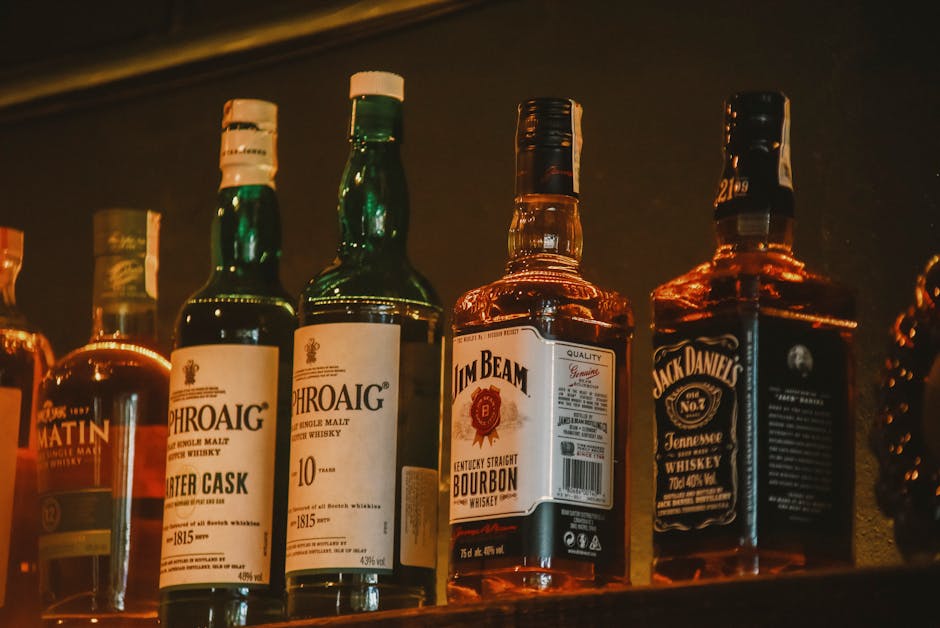
Walk into a liquor store in the United States and a bottle of Jack Daniel’s Tennessee Whiskey retails for around $25. Buy that same bottle at a supermarket in Seoul, South Korea, and you will pay closer to $47 — sometimes more. That near-doubling in price is not profit padding by Korean retailers. It is the direct result of a layered excise tax system that has governed alcohol imports for decades.
Whether you are a business importing wine by the container, an expat curious about your monthly bar tab, or a traveler planning to bring a bottle home from overseas, understanding Korean excise tax on imported alcohol is essential. This guide walks through every layer — from border tariffs to the liquor tax, education tax, and VAT — with real numbers and official sources.
Key Takeaways
- Korea taxes imported alcohol through three stacked layers: liquor tax (주세), education tax (교육세), and VAT (부가가치세), applied sequentially on top of one another.
- Thanks to trade agreements like KORUS FTA, import tariffs on wine, spirits, and beer from the US and EU are now 0% — but domestic excise taxes still apply in full.
- The effective total tax burden on whiskey from an FTA country exceeds 120% above the import price.
- Travelers entering Korea may bring 1 liter of alcohol duty-free, valued up to US$400, with the two-bottle quantity cap removed as of 2025.
- Beer switched to a volume-based tax system in January 2020, now set at 885.7 KRW per liter (updated July 2024).
How Korea Taxes Imported Alcohol — The 3-Layer System
Korea does not apply a single flat tax on alcohol. Instead, imported beverages pass through three distinct fiscal layers, each calculated on the cumulative base of what came before it. Understanding the sequence is critical, because the order of application compounds the final price significantly.
Layer 1 — Import Tariff (관세): Applied at the border on the CIF (cost, insurance, freight) value of the shipment. For most Western trading partners, this is now 0% due to free trade agreements. Non-FTA countries may still face Most Favoured Nation (MFN) tariff rates.
Layer 2 — Liquor Tax (주세): This is Korea’s primary excise duty on alcohol. It is calculated on the import price plus any tariff paid. Rates vary sharply by alcohol category — from 30% for wine to 72% for spirits.
Layer 3 — Education Tax (교육세) + VAT (부가가치세): Education tax is levied as a percentage of the liquor tax itself. VAT at 10% is then applied to the sum of all previous values: import price + tariff + liquor tax + education tax. This compounding effect is what drives the final retail price far above the import invoice value.
Import Tariffs (관세): What You Pay at the Border
Before Korea’s free trade agreement era, alcohol imports faced significant tariff barriers. Wine carried a 15% MFN tariff, spirits ranged from 15% to 30%, and beer faced a 30% tariff. These rates made imported alcohol substantially more expensive and protected domestic producers.
The landscape changed dramatically with two landmark agreements:
- KORUS FTA (US-Korea Free Trade Agreement): Wine tariffs were eliminated on March 15, 2012. Spirits tariffs were phased out by 2016. Beer tariffs were phased out by 2018. American alcohol now enters Korea tariff-free.
- EU-Korea FTA: Similarly eliminated wine tariffs, making European wines — French, Italian, Spanish, German — fully tariff-exempt at the Korean border.
For importers sourcing from non-FTA countries, MFN tariffs may still apply. Always verify the country of origin and applicable trade agreement status before calculating landed costs. The Korea Customs Service provides tariff schedules through its official portal.
It is important to emphasize: zero tariff does not mean zero tax. The domestic excise system — liquor tax, education tax, and VAT — applies regardless of tariff treatment. Removing the tariff layer simply shifts the calculation base, but the percentage taxes layered on top remain fully operative.
Liquor Tax (주세) Rates by Alcohol Type
The liquor tax (주세, ju-se) is the core excise instrument and differs substantially across beverage categories. Korea applies an ad valorem (value-based) system for most spirits and wine, and a volume-based (specific) system for beer and makgeolli.
| Alcohol Type | Tax Basis | Liquor Tax Rate | Education Tax |
|---|---|---|---|
| Whiskey / Spirits (증류주) | Ad valorem | 72% | 30% of liquor tax |
| Wine / Fruit Wine (과실주) | Ad valorem | 30% | 30% of liquor tax |
| Beer (맥주) | Per volume | 885.7 KRW/L | 10% of liquor tax |
| Soju — distilled (소주) | Ad valorem | 72% | 30% of liquor tax |
| Makgeolli / Rice wine (탁주) | Per volume | Lower (volume-based) | 10% of liquor tax |
The 72% rate on spirits places South Korea among the higher-taxing jurisdictions globally for whiskey and distilled beverages. Wine, at 30%, is comparatively more accessible — partly explaining why imported wine consumption has grown significantly since FTA tariff elimination.
The beer transition from ad valorem to volume-based taxation in January 2020 was a significant policy shift. Under the old system, imported premium beers faced higher effective taxes (proportional to their higher value), while domestic craft beers and premium local lagers were also disadvantaged. The volume-based system levels the playing field to some extent. The rate was set at 830.3 KRW/L and was updated to 885.7 KRW/L as of July 2024, indexed to reflect inflation.
Education Tax and VAT — The Hidden Add-Ons
Two additional taxes compound the total burden in ways that are easy to underestimate from the liquor tax figure alone.
Education Tax (교육세): This levy is calculated as a percentage of the liquor tax — not of the import price. For spirits and wine, the education tax is 30% of the liquor tax amount. For beer and makgeolli, it is 10% of the liquor tax. In practical terms, whiskey’s 72% liquor tax generates an additional 21.6 percentage points in education tax (72% × 30% = 21.6%). Wine’s 30% liquor tax generates 9 additional percentage points (30% × 30% = 9%).
VAT (부가가치세, 10%): Korea’s Value Added Tax applies to all goods, including alcohol. The VAT base is the cumulative value: import price + tariff + liquor tax + education tax. Because VAT sits on top of all preceding taxes, it amplifies the total burden. Even at a flat 10%, its effective contribution to the final price is higher than 10% of the import price because the base has already been inflated by excise taxes.
These two taxes are often overlooked in casual discussions of Korean alcohol pricing, but they represent a meaningful component of the total tax wedge between an import invoice and the shelf price a Korean consumer ultimately pays.
Real Cost Calculation: Whiskey, Wine, and Beer Examples
To make the tax system concrete, consider three illustrative examples using a hypothetical import price of 10,000 KRW per unit (simplified for clarity). All examples assume the product originates from an FTA country, so the import tariff is 0%.
Example 1: Whiskey (10,000 KRW import price)
- Import price: 10,000 KRW
- Tariff (0%, FTA): 0 KRW
- Liquor tax (72%): 7,200 KRW
- Education tax (30% of liquor tax): 2,160 KRW
- Subtotal before VAT: 19,360 KRW
- VAT (10% of subtotal): 1,936 KRW
- Total tax-inclusive cost: 21,296 KRW — approximately 113% above the original import price
Example 2: Wine (10,000 KRW import price)
- Import price: 10,000 KRW
- Tariff (0%, FTA): 0 KRW
- Liquor tax (30%): 3,000 KRW
- Education tax (30% of liquor tax): 900 KRW
- Subtotal before VAT: 13,900 KRW
- VAT (10%): 1,390 KRW
- Total tax-inclusive cost: 15,290 KRW — approximately 53% above import price
Example 3: Beer (1 liter)
- Import price: (variable, per liter)
- Tariff (0%, FTA): 0 KRW
- Liquor tax: 885.7 KRW (flat per liter)
- Education tax (10% of liquor tax): 88.57 KRW
- VAT: 10% on the cumulative base
- Beer’s tax burden is predictable per liter regardless of brand value — a structural advantage for premium imported craft beers compared to the old ad valorem system
These calculations explain why upscale Scotch whisky or Japanese whisky commands particularly high prices in Korean retail — the 72% base rate compounds dramatically at high import values, and education tax and VAT further amplify each incremental KRW of product value.
Traveler Duty-Free Allowance — Bringing Alcohol to Korea
For individuals rather than commercial importers, the Korean Customs Service governs what travelers may bring into Korea without paying duties and taxes. The current duty-free allowance for alcohol is:
- Quantity: 1 liter of alcohol
- Value cap: Up to US$400
- Age requirement: Must be 19 years of age or older
- Bottle count: The previous two-bottle cap was removed in 2025, so a single bottle of up to 1 liter qualifies without a quantity restriction on containers
Travelers bringing alcohol in excess of the 1-liter / US$400 threshold must declare the item at customs. Those who voluntarily declare excess alcohol — rather than attempting to conceal it — are eligible for a 30% reduction on the applicable duties and taxes. This makes honest declaration the financially sensible choice: the penalty for failed concealment far exceeds the discount foregone.
Practically speaking, travelers from wine regions or duty-free shops should note that a single 750mL bottle of wine falls comfortably within the 1-liter allowance. Two standard bottles would exceed it, triggering declaration requirements on the second bottle.
How FTAs Changed the Game for Importers
The structural impact of Korea’s free trade agreements on the alcohol import industry has been substantial. Before FTA tariff elimination, commercial importers faced a meaningful tariff cost on top of the full excise stack. For wine at 15% tariff, spirits at up to 30%, and beer at 30%, the combined burden was severe enough to limit market access primarily to premium and luxury segments.
FTA tariff elimination — rolling out from 2012 to 2018 depending on category and trading partner — fundamentally reshuffled the economics. The cost reduction at the importer level flowed through to consumer prices, expanding the market for mid-range imported wines and accessible whiskeys in Korean retail. Imports from the US and EU in particular surged after tariff removal took full effect.
However, the domestic excise structure — liquor tax, education tax, and VAT — was untouched by FTAs. These taxes remain as high as ever. The WTO dispute case DS75, which preceded Korea’s eventual tax reforms in the late 1990s, established international scrutiny over whether Korea’s alcohol tax structure unfairly disadvantaged foreign spirits relative to domestic soju. The liquor tax rate was reduced from higher historical levels to the current 72% in 2000 as part of that reform process. It has remained at 72% since.
The historical trajectory is instructive: pre-1991, the total tax burden on distilled spirits exceeded 280% of import value. By 1996, this was reduced to approximately 100%. The 2000 reform brought it to roughly the current level of 120%+ for FTA-country whiskey. This represents genuine reform, though Korea’s excise burden remains among the higher rates for spirits in the Asia-Pacific region.
Frequently Asked Questions
Is imported wine cheaper in Korea than imported whiskey, in terms of tax?
Yes, significantly. Wine (과실주) carries a 30% liquor tax, while whiskey and other distilled spirits face a 72% rate. At equal import values, the tax wedge on whiskey is more than twice that on wine. This is why a mid-range French wine is relatively accessible in Korean supermarkets while equivalent-quality Scotch commands a sharp premium.
Do Korean taxes apply to alcohol purchased at duty-free shops inside Korea?
Duty-free shops in Korea sell alcohol exempt from Korean domestic taxes, specifically for export consumption (typically travelers departing Korea). Alcohol purchased at inbound duty-free counters at Korean airports is subject to the standard 1-liter / US$400 personal allowance. If you exceed the allowance, you must pay the applicable duties and taxes on the excess amount.
How does Korea’s liquor tax compare to Japan’s?
Japan uses a similar multi-layer system but with different rates. Japan’s liquor tax on whiskey is approximately 370 yen per liter (specific tax), while Korea applies an ad valorem 72% rate. For high-value premium whiskies, Korea’s ad valorem approach generates higher absolute tax per bottle. For low-cost spirits, Japan’s specific tax can be proportionally heavier. Both countries have moved toward more uniform treatment of competing alcohol categories following WTO pressure.
Can I ship alcohol to Korea from overseas for personal use?
Personal importation of alcohol via international mail or courier is generally not permitted under Korean customs regulations. Commercial importation requires a proper license and full payment of customs duties and excise taxes. The duty-free allowance applies specifically to alcohol carried in a traveler’s personal baggage upon entry, not to shipped goods. Attempting to import alcohol via parcel post will typically result in the shipment being detained by customs.
Has Korea ever considered lowering the 72% spirits tax?
The topic recurs periodically in Korean policy and industry discussions. Trade partners — particularly the US and EU — have historically raised the issue in FTA implementation reviews, arguing that the domestic soju (주세 72%, same rate as foreign spirits) and imported spirits are taxed at the same rate on paper, but structural differences in production cost mean foreign products carry a heavier effective burden. As of 2026, the 72% rate remains unchanged. Reform discussions tend to stall against domestic industry lobbying and fiscal revenue concerns.
Conclusion
Korea’s excise tax system on imported alcohol is one of the more complex and consequential in Asia. Three stacked layers — liquor tax, education tax, and VAT — create a combined burden that can exceed 120% of import price for spirits, even after FTA tariff elimination has removed the border duty entirely. Wine buyers enjoy a relatively lighter tax treatment at 30%, while beer drinkers face a predictable per-liter charge updated periodically for inflation.
For travelers, the duty-free allowance of 1 liter and US$400 provides a practical threshold to plan around, with the 2025 removal of the two-bottle cap adding modest flexibility. Voluntary declaration of excess alcohol remains the financially rational choice, given the 30% duty reduction it unlocks.
If you are shopping from overseas and need items shipped to Korea — whether specialty spirits, wine, or other goods — jusome.com provides reliable Korean address services to help international shoppers receive purchases in Korea efficiently. Understanding the tax landscape is the first step; having the right logistics partner is the second.
Sources / 참고 자료
- Korea Customs Service — Duty-Free Allowances for Travelers
- USTR — KORUS FTA Tariff Elimination Schedule (Processed Foods & Beverages)
- USDA Foreign Agricultural Service — South Korea Adopts Volume-Based Liquor Tax for Beer
- Asia Economy — Korea Whiskey Tax Discussion (2023)
- WTO Dispute Settlement — DS75: Korea — Taxes on Alcoholic Beverages
- Moodie Davitt Report — Korean Government Removes Inbound Liquor Volume Limit (2025)
What to do next
Guides for actually using your Korean address abroad.