Korean VAT on Cosmetics Imports: The Official Customs Guide (2026)
July 10, 2026
Ordered that cult Korean serum from abroad — or buying foreign beauty products to ship to Korea? Before your package clears customs, you need to know exactly what taxes apply, how they are calculated, and which cosmetics trigger extra scrutiny at the border. This guide compiles information from the Korea Customs Service (KCS) and the U.S. Department of Commerce to give you the full picture.
Key Takeaways- Cosmetics (HS 3304) imported into Korea carry a 6.5% customs duty plus a flat 10% VAT — totaling ~16.5% on the CIF value.
- Shipments valued under USD 150 (USD 200 from the US) are fully exempt from both duty and VAT.
- Products originating from FTA countries (US, EU, UK, and others) may qualify for 0% duty with a certificate of origin — you pay only 10% VAT.
- Cosmetics containing placenta extracts or steroids cannot use the simplified express clearance route.
- Multiple packages arriving on the same day are combined for tax calculation — the $150 threshold applies to the total, not each box.
How Korea Taxes Imported Cosmetics
South Korea applies two main charges to cosmetics crossing its border: a customs (import) duty and Value Added Tax (VAT). Both are calculated on the CIF (Cost + Insurance + Freight) value of the shipment — meaning the purchase price plus shipping and insurance costs all factor into your tax base.
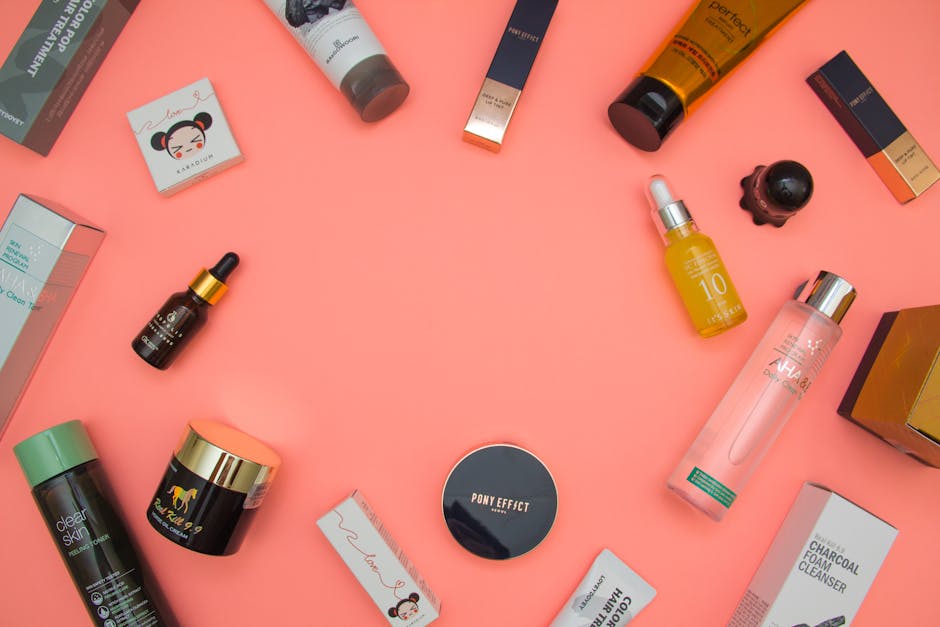
Import duties and VAT apply to cosmetics arriving in Korea above the USD 150 threshold.
The Two-Layer Tax Structure
| Tax | Rate | Applied To |
|---|---|---|
| Customs Duty (HS 3304) | 6.5% | CIF value |
| Value Added Tax (VAT) | 10% | CIF value + Customs Duty |
| Total Effective Rate | ~16.5% | On CIF value |
Sources: U.S. Department of Commerce — South Korea Import Tariffs; practical duty rate data verified via Korean customs tariff lookup for HS 3304.
The USD 150 De Minimis Threshold
The single most important number to know is USD 150. Under Korean customs law, personal-use shipments with a total customs value at or below USD 150 are exempt from both import duties and VAT.
- From the US: The threshold is raised to USD 200 under the KORUS Free Trade Agreement.
- From all other countries: USD 150 applies.
- The exemption covers duty AND VAT — you owe nothing if you stay under the limit.
According to the Korea Customs Service’s express cargo clearance guidelines: “If the total price of goods exceeds USD 150, customs duties and VAT will be calculated based on the total customs value.” (KCS — Clearance Procedures for Express Cargo)
Watch Out: Package ConsolidationIf you place multiple orders that all arrive in Korea on the same day, customs officers combine their values for threshold purposes. Splitting one $200 order into two $100 orders does not guarantee duty-free entry if they clear on the same day.
Step-by-Step: How to Calculate Your Cosmetics Import Tax
 CIF-based calculation: add product cost, shipping, and insurance before applying duty and VAT.
Here is a worked example for a $180 USD order of foreign skincare shipped to Korea (non-US origin):
- Calculate CIF value
Product: $180 + Shipping: $20 + Insurance: $2 = CIF $202 - Apply customs duty (6.5%)
$202 × 6.5% = $13.13 duty - Calculate VAT base
$202 + $13.13 = $215.13 - Apply VAT (10%)
$215.13 × 10% = $21.51 VAT - Total tax owed
$13.13 + $21.51 = $34.64
All amounts are converted to Korean Won at the official customs exchange rate. Payment must be made within 15 days after your goods clear customs. (trade.gov — South Korea Import Tariffs)
FTA Benefits: How to Pay Only 10% VAT (No Duty)
 Products from FTA partner countries may qualify for 0% duty — but you must proactively request it.
South Korea has Free Trade Agreements with the United States, the European Union, the United Kingdom, Canada, Australia, and many other countries. If your cosmetics originate from and are shipped directly from an FTA partner country, the customs duty rate can drop to 0% — meaning you pay only the 10% VAT.
How to Claim FTA Preference
- Obtain a certificate of origin (or manufacturer’s statement of origin) from the seller.
- Submit it to your courier or customs broker before clearance.
- Under KORUS FTA, written or electronic certification from the manufacturer, exporter, or importer is accepted. Records must be kept for five years. (trade.gov — South Korea Import Requirements)
- FTA preference is not automatic — you must proactively request it and provide documentation.
Three Clearance Routes for Express Shipments
The Korea Customs Service uses three clearance tiers for express cargo, each with different documentation and inspection requirements:
| Route | Value Range | Requirements |
|---|---|---|
| List Import Declaration | Under USD 150 (USD 200 from US) | Invoice with sender/recipient name, phone, address. Duty & VAT exempt. |
| Simplified Import Declaration | USD 150–2,000 | Simplified declaration form. May clear without physical inspection if details appear accurate. |
| General Import Declaration | Over USD 2,000 | Full commercial import declaration. All express cargo receives 100% X-ray inspection. |
Source: Korea Customs Service — Clearance Procedures for Express Cargo
Prohibited and Restricted Cosmetics at Korean Customs
 Certain cosmetic formulas face extra scrutiny or outright prohibition at Korean customs.
Not all cosmetics qualify for the simplified express clearance route. The Korea Customs Service explicitly excludes certain products:
- Cosmetics containing placenta extracts — cannot use List Import Declaration.
- Cosmetics containing steroids — flagged for additional inspection.
- Harmful cosmetics with unidentified ingredients — may be seized or returned.
South Korea’s Ministry of Food and Drug Safety (MFDS) maintains a list of 1,032 prohibited substances that cannot be present in any cosmetic product, including steroids, radioactive materials, and certain antibiotics. Products found to contain prohibited ingredients will not be permitted to pass through customs. (MFDS — Cosmetics Regulatory Information)
Commercial Imports vs. Personal Use
The rules above cover personal-use imports. If you are importing cosmetics commercially (to sell in Korea), the requirements are substantially more complex:
- Commercial cosmetics imports require prior approval from the Korea Pharmaceutical and Bio-Pharma Manufacturers Association (KPTA).
- The Korea Customs Service cross-checks KPTA approval status before releasing commercial shipments.
- Standard commercial documentation is required: commercial invoice (original + 2 copies), packing list (2 copies), bill of lading or airway bill, and an import declaration in Korean.
- Additional MFDS testing or certification may be required before clearance is granted.
Source: trade.gov — South Korea Import Requirements and Documentation
Practical Tips to Minimize Your Tax Bill
- Stay under USD 150 — split large orders across different shipping dates, not arrival days.
- Request FTA documentation from the seller if your product originates from a KORUS/EU/UK FTA country.
- Check HS codes before ordering — some specialty skincare (e.g., products with pharmaceutical claims) may fall under different HS categories with higher duty rates.
- Declare the correct value — undervaluing is a customs offense; Korean customs officers are trained to identify low-value declarations on high-cost items.
- Use a licensed customs broker for shipments over USD 2,000 or for commercial quantities.
Frequently Asked Questions
Do I pay Korean VAT if I buy Korean cosmetics from a local store in Korea?
No — domestic purchases are subject to Korean VAT at the point of sale (already included in the price), not import VAT. Import VAT only applies to goods entering Korea from abroad.
I’m ordering from a US beauty retailer. How much will I pay in taxes?
If your total CIF value exceeds USD 200 (the KORUS threshold), expect 6.5% customs duty + 10% VAT on the full CIF amount — roughly 16.5% effective rate. If the products were manufactured in the US and you provide a certificate of origin, the 6.5% duty drops to 0%.
What if I’m a tourist bringing cosmetics into Korea in my luggage?
Passenger duty-free allowances apply instead of the import rules above. Travelers entering Korea are generally allowed up to USD 800 worth of goods duty-free in their luggage. Cosmetics purchased at on-arrival duty-free shops are exempt from customs duties.
How long does customs clearance take for cosmetics?
All express cargo undergoes 100% X-ray inspection. Routine personal-use cosmetics under USD 150 typically clear within 1 business day. Flagged items (restricted ingredients, undervalued declarations) can take several days or more.
Can I get a VAT refund on cosmetics I buy in Korea and take home?
Yes — Korea operates a tourist VAT refund program. Purchases of KRW 30,000 or more at participating stores qualify. You must claim the refund at designated airport or port counters before departure.
Conclusion
Importing cosmetics into Korea is straightforward once you know the numbers: 6.5% duty + 10% VAT on CIF value, with a USD 150 exemption threshold for personal shipments. FTA certificates of origin can eliminate the duty entirely. The main pitfalls are the package-consolidation rule that can push you over the threshold, and restricted ingredients that block simplified clearance. Keep your shipment values accurate, request your FTA documentation upfront, and you will have a smooth experience with Korean customs.
Sources / 참고 자료
- Korea Customs Service — Clearance Procedures for Express Cargo — de minimis threshold, restricted cosmetics, clearance tiers
- U.S. Department of Commerce / ITA — South Korea Import Tariffs — VAT rate (10%), CIF valuation method, special consumption taxes
- U.S. Department of Commerce / ITA — South Korea Import Requirements and Documentation — FTA certification, commercial import documentation, MFDS requirements
- Korea Ministry of Food and Drug Safety (MFDS) — Cosmetics — prohibited ingredients list (1,032 substances)
- Momotherose — Overseas Shopping Customs Guide (Korea) — cosmetics duty rate 6.5%, practical threshold and FTA guidance
- Korea Customs Service — Customs Clearance Guide for Passengers — traveler duty-free allowance
본 글은 위 공식 출처에서만 정보를 인용하여 작성되었습니다. 세율 및 규정은 변경될 수 있으니 최신 정보는 반드시 공식 사이트에서 확인하세요.
What to do next
Guides for actually using your Korean address abroad.