Korea Customs Threshold $150 USD: Complete Guide for International Shoppers (2026)
July 06, 2026
If you live in Korea and order from an overseas shop, three things decide whether the parcel simply shows up or sits in customs: the $150 duty-free limit, your Personal Customs Clearance Code (PCCC, 개인통관고유부호), and whether the delivery address and postal code on the parcel match what customs has on file for you. This is the one page on this site that explains all three for foreign residents. The shop-by-shop guides (Amazon, eBay, Shein, Temu and others) link back here instead of repeating it.
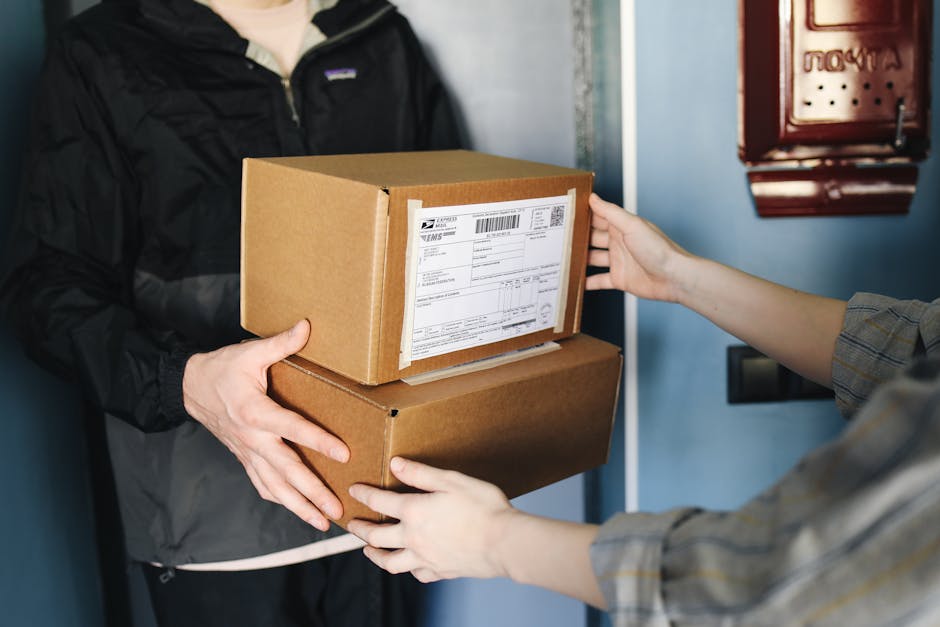
Illustrative stock photo.
The short version
- Personal-use goods priced at US$150 or less (item price, shipping not counted) are exempt from duty and VAT. For parcels from the United States that go through the simplified “list clearance” route, the limit is US$200.
- Above the limit there is no partial exemption: duty and VAT are charged on the whole value (item price plus shipping and insurance).
- Every overseas order needs your PCCC. It is free, starts with “P”, and since 1 January 2026 it expires after one year unless you renew it.
- Since 2 February 2026 customs also compares the postal code of the delivery address with the addresses registered on your PCCC.
- As a foreign resident you normally apply with your ARC (Alien Registration Card). Exactly which ID and phone options work for people without an ARC or a Korean phone is not confirmed in current official guidance, so check with Customs (see below) before relying on it.
The $150 / $200 limit in detail
| Where the parcel ships from | Duty- and VAT-free limit | Condition |
|---|---|---|
| United States | US$200 | Only for goods cleared by “list clearance” (목록통관). Items that are excluded from list clearance fall back to the $150 rule |
| Everywhere else | US$150 | Personal use, not repeated or split shipments |
Points that trip people up:
- The limit is on the goods price. Shipping and insurance are not counted when checking the limit, but they are added to the taxable value if you go over.
- Alcohol, supplements, medicine, food, tobacco and some other goods are excluded from list clearance and go through a regular import declaration even if they come from the US. For those, think “$150”, not “$200”. Customs’ latest list of excluded items is the one to trust; see the product guides below.
- Combining rule (changed in November 2022). Parcels are added together only when you bought them from the same overseas seller on the same day. Different sellers, or the same seller on different days, are not combined just because they land on the same date. Many older blog posts still say “same arrival day”, which is outdated.
- Splitting an order to dodge the limit can still be treated as repeated or split import, which the exemption excludes. Do not plan around it.
 Illustrative stock photo.
How duty and VAT are worked out above the limit
- Taxable value = item price + shipping + insurance.
- Duty = taxable value × the duty rate for the product type.
- VAT = (taxable value + duty) × 10%.
- Some goods add special taxes on top (luxury bags and watches, alcohol, perfume and others).
Worked example: a $180 jacket with $20 shipping, no insurance, from a country without a trade agreement. Taxable value $200. Duty at 13% is $26. VAT is ($200 + $26) × 10% = $22.60. Total tax about $48.60, converted to won at the customs rate. Because the order is over $150, nothing is deducted.
| Product type | Basic duty rate | VAT |
|---|---|---|
| Clothing, shoes | 13% | 10% |
| Handbags | 8% (luxury bags also carry a 20% special consumption tax on the part above 2 million won) | 10% |
| Cosmetics, skincare | 8% basic; the customs calculator also lists 6.5% under some agreements | 10% |
| Health supplements | 8% | 10% |
| Laptops | 8% basic; 0% in some cases | 10% |
| Books, discs | 0% | 10% |
Rates come from Korea Customs’ own estimator and change with the product code and with trade agreements (goods made in the US or EU can be cheaper if the seller provides proof of origin). Check any specific item with the official duty estimator before you buy. Travellers bringing goods in a suitcase follow a different system (US$800 allowance), not this one.
The PCCC: what it is and what changed in 2026
The PCCC is a code that takes the place of your resident registration number on customs paperwork. Format: the letter P followed by 12 digits. Shops ask for it in a “customs ID” field at checkout, or the carrier asks you for it afterwards.
What the Korea Customs Service announced for 2026:
| Change | Detail |
|---|---|
| Validity | From 1 January 2026 a PCCC is valid for one year. New codes count from the issue date. Codes issued before 2026 expire on your birthday in 2027 |
| Renewal window | 30 days before to 30 days after the expiry date (60 days in total). Miss it and the code is cancelled automatically |
| Resetting the clock | Changing your phone number or address, or re-issuing the code, restarts the one-year period from that day |
| Address check | From 2 February 2026 customs checks the postal code of the delivery address as well as name and phone number |
| Saved addresses | Up to 20 delivery addresses can be pre-registered |
| Limits | One code per person. New issues, including re-issues and cancellations, are capped at 5 per year |
How to get one as a foreign resident
Customs’ English FAQ (published in 2021, so treat it as background) says that with an Alien Registration Card or a Certificate of Foreign Residence in Korea you can have a PCCC issued, and that identification requires either an accredited certificate or a mobile phone on a Korean carrier. If you have neither, you bring ID to a customs office.
- Have ready: your ARC, a Korean mobile number registered in your own name (or a certificate that works for identity checks), and your name spelled exactly as on your ARC and passport.
- Open the PCCC page of UNI-PASS (the customs portal) or use the customs mobile app. The page is in Korean; your browser’s translate function works.
- Choose new issue (신규발급) and verify your identity.
- Enter your details. News coverage of the 2026 changes says the form now asks for more fields such as English name, nationality and address.
- Register the delivery address with its 5-digit postal code. If you shop from several places (home, office), add each one, up to 20.
- Copy the code and save it. Put the renewal date in your calendar.
What is not confirmed
- Passport-only applicants and short-stay visitors without an ARC: older customs material allowed a passport number to be used at clearance in place of a PCCC, but I could not find a current 2026 statement, and the new postal-code check makes it unclear. Ask Customs before assuming it works.
- Foreigners without a Korean phone: the 2021 FAQ points to a certificate or an in-person visit. Current options are not confirmed.
- Call the customs call centre (125) or ask at a customs office for the current rule. Do not buy a pricey item on the assumption that a passport number will do.
Where PCCCs go wrong
| Problem | Fix |
|---|---|
| Name on the order differs from the PCCC record (nickname, order of given and family names) | Use the spelling on your ARC at checkout and in the PCCC |
| You moved and only updated the shop address | Update the address on your PCCC too. Re-issuing restarts the one-year clock, so wait until open orders have cleared |
| Postal code typed from an old 6-digit memory or a different building | Look it up on juso.go.kr and use the 5-digit code |
| Code expired without you noticing | Renew inside the 60-day window; after auto-cancellation you apply again |
| Re-issued while a parcel was in transit | Parcels not yet declared may need re-confirmation, which slows clearance |
Moving house also means filing a change-of-residence report with immigration (new address within 15 days of moving in for registered foreigners). The shipping address you type should be the same as the one on your ARC, written in English.
 Illustrative stock photo.
Your Korean address, ready to paste
Sample address for the layout (a real public building used only to show the format; the room number is made up):
Room 1203, 209 Sejong-daero, Jongno-gu, Seoul 03171, Republic of Korea
Paste your own into the Jusome address converter to get the English version and the 5-digit postal code.
What happens when customs contacts you
If duty is due, or if the system cannot match you, the carrier (Korea Post, FedEx, DHL, CJ Logistics and so on) usually texts or emails you, often in Korean, asking for your PCCC or for payment. Reply quickly to avoid storage charges or return of the parcel. Paste the message into a translation app and check the sender against the courier you expect. Never send photos of ID cards to an unknown number.
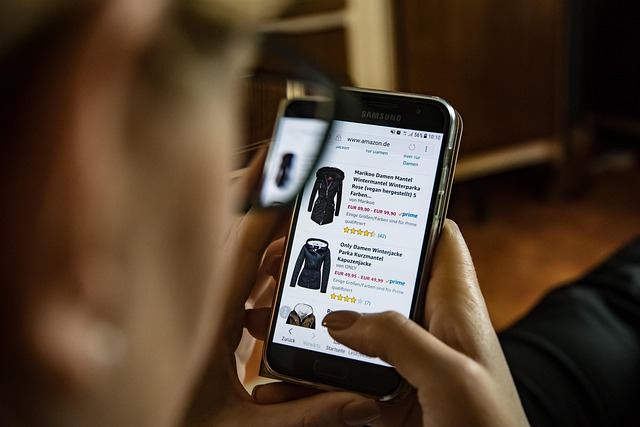 Illustrative stock photo.
Other limits this guide does not cover
| Topic | Rule in brief | Guide |
|---|---|---|
| Supplements | Up to 6 bottles for personal use | iHerb guide |
| Alcohol | Not eligible for list clearance; stacked taxes; travellers get 2 L / $400 | Alcohol tax guide |
| Cosmetics | Duty plus VAT above $150; some ingredients are restricted | Cosmetics guide |
| Amazon | What ships to Korea and PCCC at checkout | Amazon guide |
| Sending things from Korea to your home country | The destination country’s customs rules apply | Reshipping guide |
Shop guides: where to put the PCCC
Amazon address form · Amazon shipping to Korea · eBay · Etsy · Shein · Temu · AliExpress · Walmart · iHerb · Shopify stores
FAQ
Do I pay tax on a $120 order?
No, if the goods are for personal use and not part of a split purchase, it is under the limit. You still need a valid PCCC.
Is the limit $150 or $200?
$150 in general. $200 applies to US-origin shipments cleared through list clearance, not to goods that need a regular import declaration.
Does shipping count towards the $150?
No for the exemption test, yes for the tax base once you are over the limit.
Can I use my passport number instead of a PCCC?
Old customs material said a passport number could be used at clearance, but a current rule is not confirmed. Get a PCCC if you have an ARC.
Do I need a new PCCC after moving?
You need to update the address on the existing one. Doing so restarts the one-year validity.
Sources
- Korea Customs Service, 2026 PCCC changes (Korea Policy Briefing, 22 Jan 2026)
- Korea Customs Service, overseas purchase checklist (Korea Policy Briefing, 8 Jan 2026)
- Customs Service press release on the end of same-arrival-day combining (16 Nov 2022)
- Enforcement Rule of the Customs Act, Article 45 (law.go.kr)
- Korea Customs duty estimator for overseas purchases
- Korea Customs English FAQ on PCC (PDF, 2021)
- UNI-PASS PCCC portal
- Immigration Act, Article 36 (change of residence report)
*Prepared from the sources above. Rules can change, so confirm on the official sites.*
What to do next
Guides for actually using your Korean address abroad.